Personal protective equipment, or PPE, is supposed to be the simplest part of workplace safety. PPE compliance in manufacturing sounds straightforward until you actually try to run it well. Buying gear and handing it out is the easy part. The harder part is matching every piece of equipment to the right hazard, keeping up with rules that differ by country, and knowing where PPE actually fits inside a much bigger safety picture.
This guide walks through all of it. What counts as PPE, what the major compliance frameworks require across the US, EU, and India, where PPE sits relative to other safety controls, and what newer options like smart PPE add for manufacturers who want to go beyond the basics.
What Is Considered as PPE Equipment in a Manufacturing Plant?
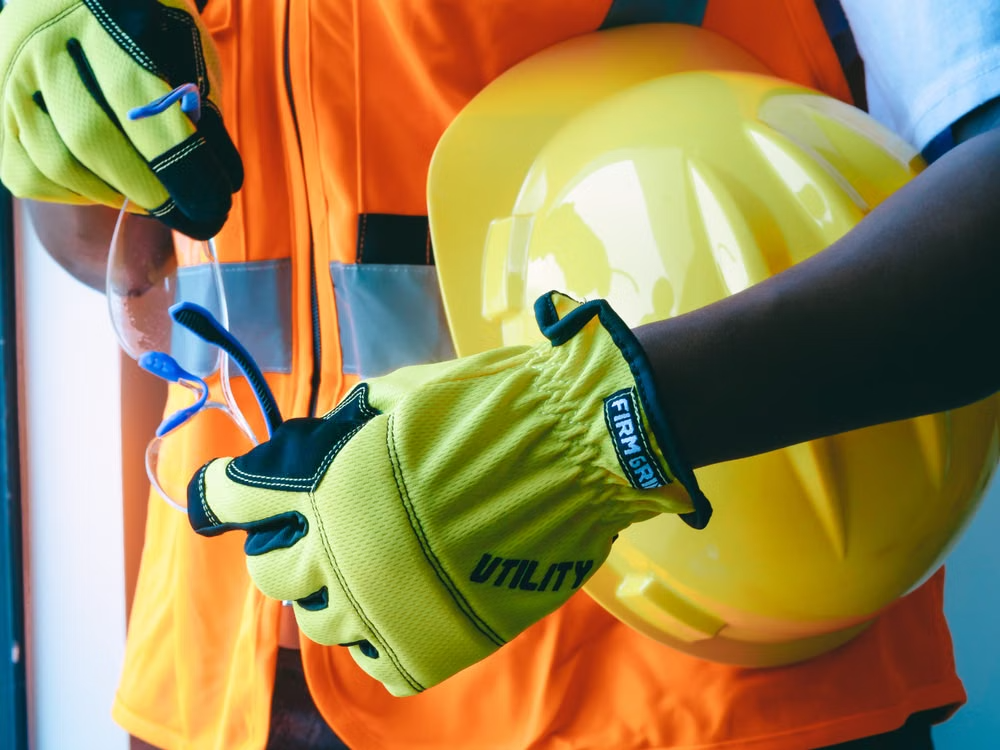
PPE covers more ground than most people picture when they hear the term. Before getting into compliance rules and standards, it helps to see the full range of equipment that falls under this umbrella in a manufacturing setting.
Head protection
- Hard hats, Type I and Type II
- Bump caps for low-clearance work areas
Eye and face protection
- Safety glasses and spectacles
- Safety goggles
- Face shields
- Welding helmets and welding goggles
Hearing protection
- Foam and reusable earplugs
- Banded earplugs
- Earmuffs
Respiratory protection
- Disposable filtering facepiece respirators (N95, P100)
- Half-face and full-face elastomeric respirators
- Powered air-purifying respirators (PAPRs)
- Supplied-air respirators
Hand protection
- Cut-resistant gloves
- Chemical-resistant gloves
- Heat-resistant gloves
- Anti-vibration gloves
- General-purpose work gloves
Foot protection
- Steel-toe and composite-toe boots
- Metatarsal guards
- Electrical hazard (EH) rated footwear
- Slip-resistant soles
Body and fall protection
- High-visibility vests and clothing
- Flame-resistant (FR) coveralls
- Chemical-resistant aprons and suits
- Safety harnesses and lanyards
- Knee pads
Not every facility will need all of this. A hazard assessment for a sheet metal line looks nothing like one for a chemical mixing room, so the actual PPE list always gets built around the specific job, not the other way around. But based on the products and the complexity of the manufacturing, you will need most of these.
What Are the Different PPE Categories?
A solid PPE program starts with matching the equipment to the actual hazard, not the other way around. Here is how the major categories break down, along with the standards that typically apply across the US and EU markets.
Buying PPE off a catalog page without checking which of these standards actually matches the hazard is one of the most common and most expensive mistakes a procurement team can make. A glove rated for abrasion resistance will not save anyone's fingers from a solvent burn.
Why PPE Compliance Keeps Showing Up on the Wrong List
In fiscal year 2025, eye and face protection violations under 29 CFR 1926.102 landed on OSHA's list of the ten most cited standards again, with 1,665 citations issued. Most of these came down to a simple pattern: workers doing grinding, welding, or chemical handling tasks without the eye protection the job actually called for, or wearing eye gear that was not rated for the hazard in front of them.
That number sits inside a bigger picture. Private industry employers in the United States reported about 2.5 million nonfatal workplace injuries and illnesses in 2024, which is actually the lowest figure on record since the Bureau of Labor Statistics started tracking this in 2003.
Manufacturing was one of the sectors where injury rates fell that year. The improvement is real, but it also means the remaining injuries are the stubborn ones, the kind that better PPE selection and better controls upstream of PPE are meant to catch.
The financial side is where this stops being an abstract compliance question. The National Safety Council put the average cost of a medically consulted workplace injury at $48,000, with total work injury costs across the US economy reaching $181.4 billion that year.
A single bad glove choice or a respirator that does not fit properly can turn into a claim that costs more than a year of properly budgeted safety equipment for an entire shift.
How Is the PPC Compliance Regulations Decided Based on Your Locations?
If you manufacture in one country and sell in three others, which is increasingly normal, PPE compliance is not just one rulebook. There are several, and they do not always agree on classification, certification, or how long a product stays valid before it needs re-testing.
The practical upshot is that a glove certified for the EU market under EN 388 is not automatically compliant in India just because it carries the same physical rating. India has also been tightening machinery and equipment safety rules, with BIS certification requirements phasing in for machinery and electrical equipment categories through 2025 and 2026.
If your plant exports finished goods or imports components, your needs to know which standard applies to which market.
Where PPE Compliance Falls Apart
Most plant audits often fail for smaller reasons, like a new hire never gets fit-tested for a respirator because onboarding moved too fast. Or a supervisor approves a bulk PPE order based on price rather than the actual hazard assessment for that line. Someone keeps wearing safety shoes that are two years past their useful life because nobody flagged the wear pattern.
The other recurring gap is documentation. Under the EU regulation, manufacturers and distributors are expected to hold technical files and declarations of conformity for ten years.
Under OSHA, a hazard assessment that was never written down does not count as having been done at all. And auditors are trained to watch out for these regulations during the assessment.
PPE Is Supposed to Be the Last Option, Not the First
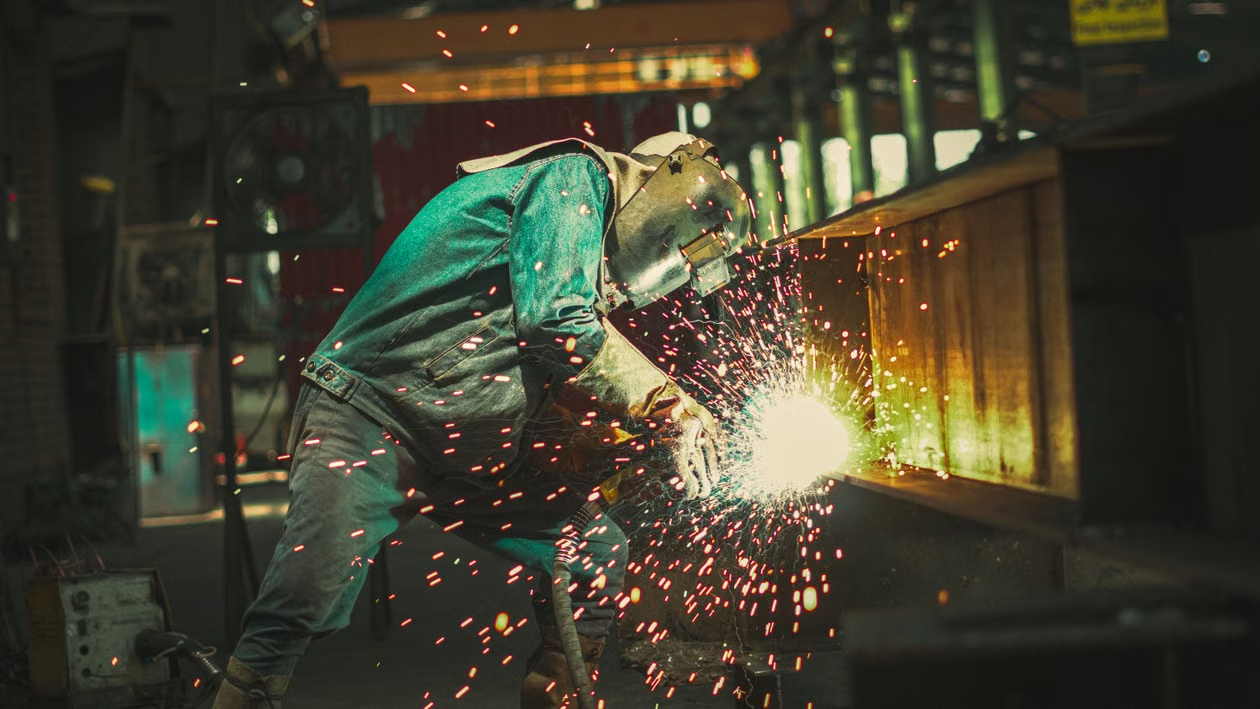
Here is something that surprises a lot of people outside the safety profession. PPE sits at the bottom of what occupational health experts call the hierarchy of controls, not the top. The Centers for Disease Control and Prevention, through NIOSH, ranks five tiers of control, from most effective to least effective:
- elimination,
- substitution,
- engineering controls,
- administrative controls, and
- personal protective equipment.
Elimination means removing the hazard entirely, like redesigning a task so nobody has to reach into a pinch point. Substitution means swapping something dangerous for something less dangerous, such as switching from a solvent-based degreaser to a water-based one.
Engineering controls physically separate the worker from the hazard through machine guards, ventilation systems, or barriers, and they tend to cost more upfront but less over time because they do not depend on a person remembering to do something correctly every single shift.
PPE only enters the picture once the hazard cannot be eliminated, substituted away, or engineered out, and once administrative controls like job rotation and training have done what they can.
It is a reminder that a plant relying mainly on gloves and goggles to manage a hazard that could be engineered out is choosing the least reliable option on the list, often because it is the cheapest one to implement quickly.
What Manufacturers Are Doing Alongside Traditional PPE Equipment
A genuine shift is happening in how manufacturers think about protection, and it is not just about buying better gloves. Smart PPE, equipment built with sensors and connectivity layered into the gear itself, has moved from a novelty to a real line item. The global smart PPE market was valued at roughly $1.5 billion in 2024 and is projected to reach $3.4 billion by 2030, growing at close to 15% a year.
What does that actually look like on a factory floor?
- Helmets with embedded impact sensors that alert a supervisor the moment someone takes a hard hit.
- Respirators with built-in air quality sensors that give a digital readout instead of relying on a worker noticing something feels off.
- Vests that track location and detect falls in real time, which matters enormously in large facilities where a worker down in an aisle might not be noticed for several minutes.
None of this is cheap. Industry estimates put smart helmets and connected wearables somewhere between $200 and $500 per unit, and full exoskeleton systems for tasks involving repetitive lifting can run from roughly $1,500 to nearly $75,000 depending on the application.
For a plant weighing whether that investment is worth it, the comparison that matters is the sticker price against the average $48,000 cost of the injury the technology is designed to prevent or catch early.
How to Build a PPE Program That Actually Holds Up Under Audit
A compliance program that looks good on paper but falls apart the first time an inspector walks the floor is worse than having no program at all, because it creates a false sense of security. A few things separate the programs that hold up.
- First, the hazard assessment has to be specific to each task and each line, not copied from a generic template, and it needs a paper trail showing when it was done and by whom.
- Second, PPE selection has to be traceable back to that assessment, so when someone asks why a particular glove was chosen for a particular station, there is an actual answer beyond "that's what we always order."
- Third, fit testing and training need to happen on a schedule that matches new hires and equipment changes, not just once a year during a compliance sweep.
- Finally, build in a regular review of where PPE is being used as a substitute for a fix higher up the hierarchy of controls.
If the same glove or respirator keeps showing up as the answer to the same recurring near-miss report, that is usually a sign an engineering control got skipped, not a sign the PPE needs replacing.
What Strong PPE Compliance Actually Looks Like
PPE compliance in manufacturing is not really about owning a closet full of approved gear. It is about proving, with records and with practice, that the right protection is matched to the right hazard, that it sits in its proper place at the bottom of the hierarchy of controls rather than carrying the whole safety program on its own, and that the program can survive contact with an inspector who has seen every excuse before.

.svg)