CNC Machined Components for Custom Manufacturing

Precision-built. Integrated. Ready for production.
Get A Qoute
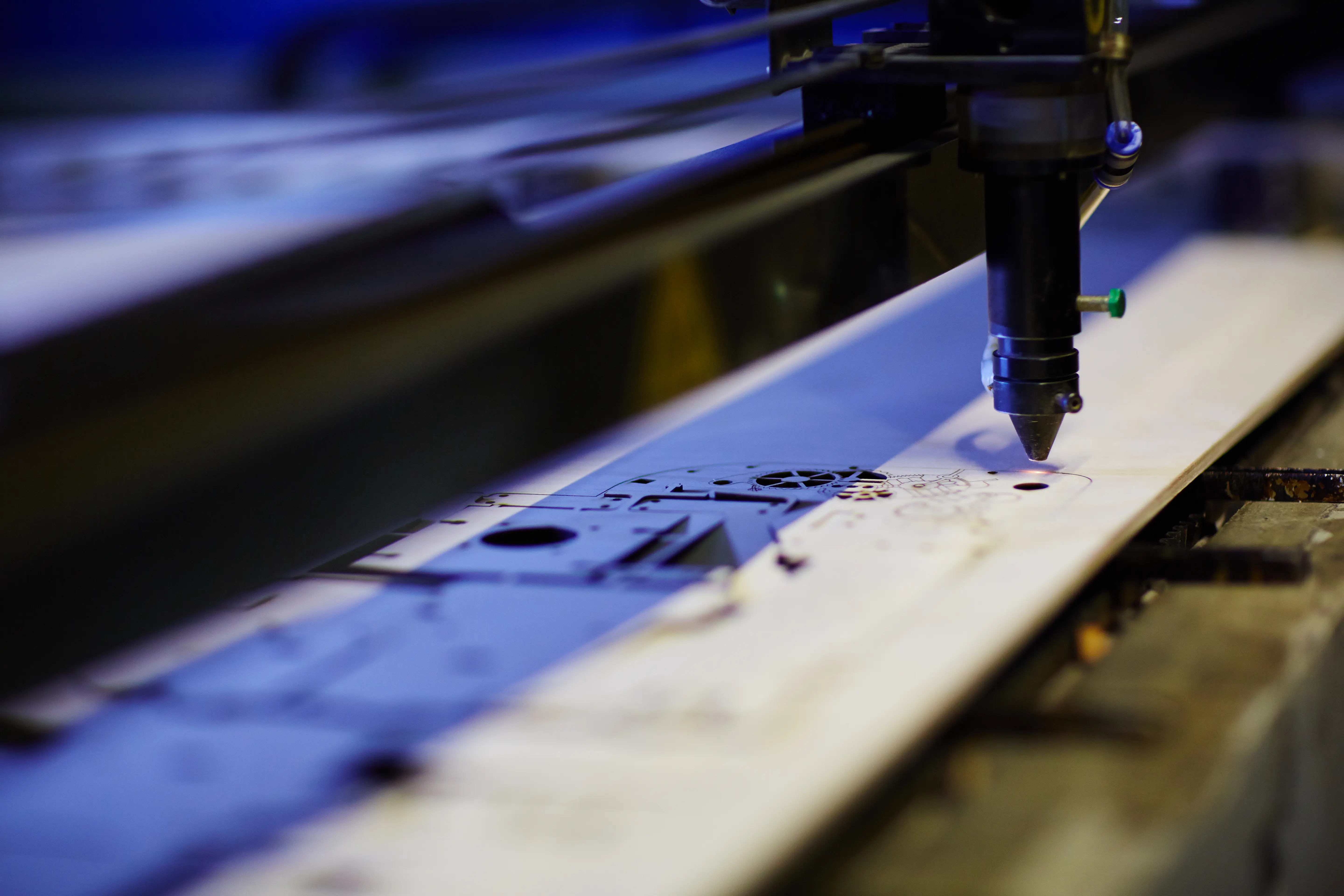
At Wootz.work, we deliver complete, end-to-end manufacturing solutions that integrate multiple advanced production methods, including CNC machining provided through our manufacturing partners. These partners operate state-of-the-art CNC machines to produce custom metal components with precision milling, turning, and routing, all as part of the final product manufacturing process.
Our custom CNC machining services ensure every part is produced under strict quality standards and backed by ISO-certified systems to guarantee consistency, accuracy, and reliability.

Our Approach to CNC Machining

CNC (Computer Numerical Control) machining is a precision manufacturing process that uses automated, computer-controlled tools to shape materials into exact geometries. CNC machining is ideal for achieving tight tolerances, complex contours, and superior surface finishes.At Wootz.work, CNC machining is a core capability integrated within the broader production workflow managed by our trusted manufacturing network.

Through our custom CNC machining services, we ensure that every component of your product, from machined housings to precision inserts—is produced to specification, quality-assured, and seamlessly integrated into the final assembly.

Capabilities Through Our Manufacturing Partners

Our manufacturing partners operate advanced equipment and adhere to international standards for precision production.

This ensures every part meets the performance, durability, and dimensional accuracy required for demanding industries like oil, gas, industrial, and construction manufacturing.
Our CNC machining capabilities include:
  • 3-, 4-, and 5-axis machining for complex geometries
  • Tight tolerances up to ±0.001" (0.025 mm)
  • Precision milling, turning, and routing using advanced CNC machine routers
  • Material traceability, inspection reports, and CoCs
  • ISO 9001:2015, ISO 14001:2015, and ISO 45001:2018 certified facilities
Get an Instant Quote
What is CNC Machining?
CNC (Computer Numerical Control) machining is a subtractive manufacturing process that uses automated cutting tools controlled by computer programs to create parts from solid blocks of material. Using 3D CAD models, CNC machines precisely remove material layer by layer until the desired shape is achieved.

The process is ideal for high-precision parts that require tight tolerances, superior surface finishes, and repeatable accuracy. CNC machining is used extensively in industries like aerospace, robotics, energy, medical devices, and automotive systems, where performance and precision are non-negotiable.Advanced CNC milling, turning, and routing centres handle both simple and complex geometries, making this the go-to choice for engineering teams looking for quality, consistency, and scalability.

CNC Machining Processes

CNC machining plays a vital role in the production of both metal and plastic parts used across industries such as aerospace, automotive, electronics, and industrial equipment. As part of our custom CNC machining service, we support a wide range of part requirements with precision and consistency.

The three most common forms of CNC machining include milling, turning, and routing, each suited to different geometries, materials, and performance requirements.
Get an Instant Quote
Custom CNC Milling

CNC milling is a subtractive manufacturing process that removes material from a solid workpiece using rotating cutting tools. A modern CNC milling machine is ideal for creating flat surfaces, pockets, slots, holes, and contoured shapes with exceptional precision.

Modern CNC milling machines often operate on 3-, 4-, or 5-axis systems, which allow the tool to move in multiple directions and machine complex geometries with high precision.


Milling is widely used for producing components such as housings, brackets, molds, and mechanical assemblies that require both structural integrity and aesthetic surface quality. It supports a wide range of materials, including aluminium, stainless steel, titanium, and engineering plastics.

Custom CNC Milling

CNC milling is a subtractive manufacturing process that removes material from a solid workpiece using rotating cutting tools. A modern CNC milling machine is ideal for creating flat surfaces, pockets, slots, holes, and contoured shapes with exceptional precision.
Modern CNC milling machines often operate on 3-, 4-, or 5-axis systems, which allow the tool to move in multiple directions and machine complex geometries with high precision.

Milling is widely used for producing components such as housings, brackets, molds, and mechanical assemblies that require both structural integrity and aesthetic surface quality. It supports a wide range of materials, including aluminium, stainless steel, titanium, and engineering plastics.

CNC Turning

CNC turning is used to produce cylindrical or rotationally symmetric parts by rotating the material against a cutting tool. It’s particularly effective for manufacturing shafts, pins, bushings, spacers, and threaded fittings.

During the turning process, the machine precisely controls the rotational speed and cutting depth to achieve consistent diameters, smooth finishes, and concentric accuracy.

CNC turning is essential for parts that demand tight tolerances, roundness, and axial alignment, and is commonly used in applications such as machinery components, fasteners, and precision instruments.

CNC Routing

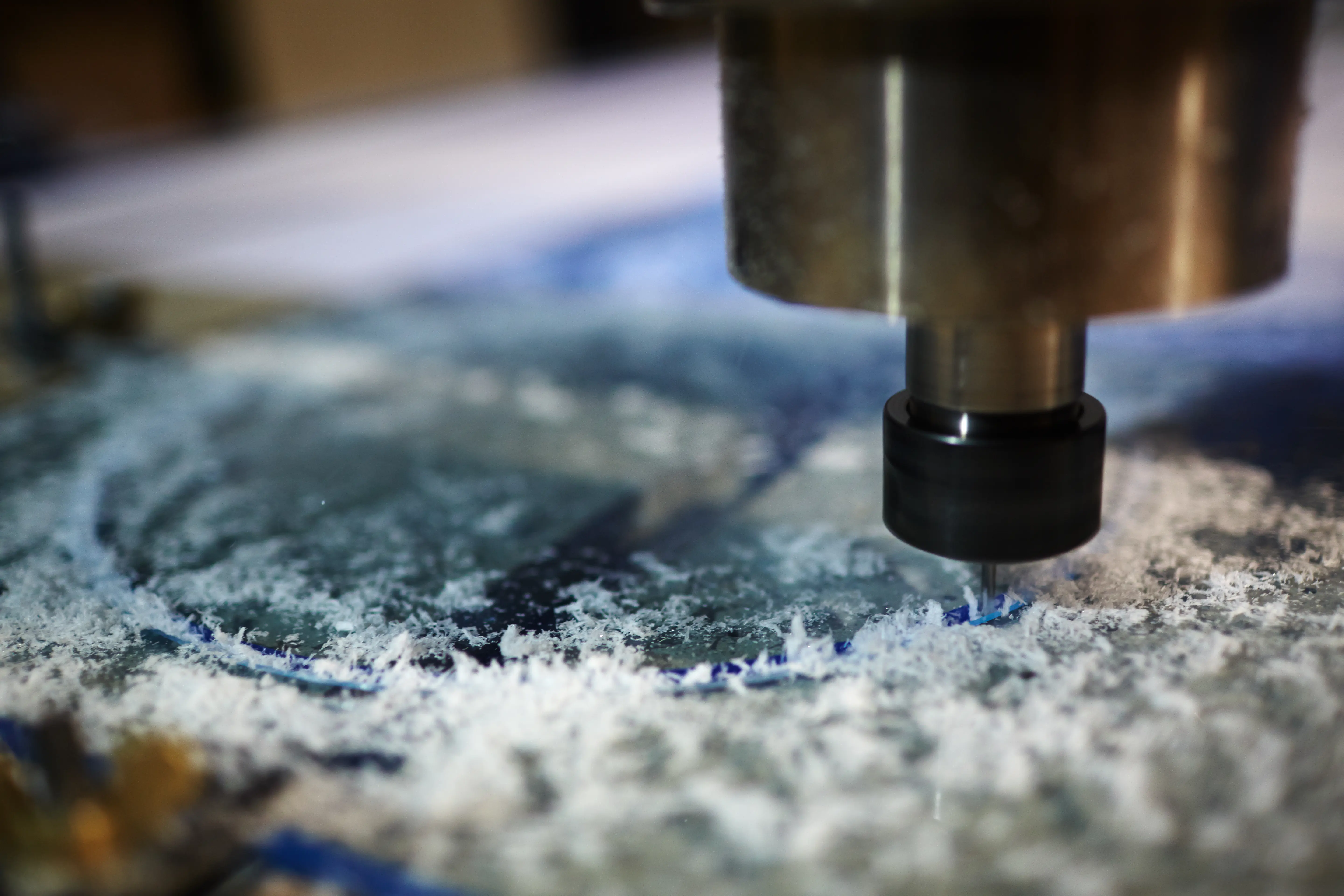
CNC routing is similar to milling but is typically used for flat or sheet materials, including plastics, composites, and soft metals. Advanced CNC machine routers use high-speed rotating bits to cut and shape large panels into specific forms, contours, or openings.

This process is well-suited for producing enclosures, display panels, fixtures, and prototypes, where dimensional stability, smooth edges, and clean finishes are important.

CNC routing offers a cost-effective method for shaping lightweight materials while maintaining high accuracy and repeatability, making it a key process in industries such as electronics, signage, and product design.

High Volume CNC Machining

High-volume CNC machining refers to the use of automated, computer-controlled production systems to manufacture large quantities of precision parts with consistent quality and dimensional accuracy. In these setups, each CNC machine is optimized for repeatable output, allowing OEMs (Original Equipment Manufacturers) and large-scale producers to achieve uniform performance across thousands of identical components.

By integrating automated workflows, dedicated production lines, and process monitoring systems, high-volume CNC machining ensures that each batch maintains the same precision and traceability as the first.

CNC Machining Tolerances

Tolerances define how much variation is permitted in the dimensions of a machined part and are critical to ensuring proper fit, function, and performance in assembled products.

In CNC machining, tolerances are determined by factors such as material type, part geometry, tooling precision, and machine stability. Different manufacturing setups can achieve varying levels of accuracy, from general-purpose to ultra-precision machining.
Feature
Standard / Capability
General metals
80" × 48" × 24" (2032 × 1219 × 610 mm)
General plastics
±0.005" for standard features
High-precision components
Achievable down to ±0.001” (±0.025 mm), depending on design and process capability
Surface finishes and edge conditions are also part of the precision specification. Most machined parts are finished to around 125 Ra or better, with edges deburred and smoothed for safety and assembly compatibility.

International standards such as ISO 2768 and GD&T (Geometric Dimensioning and Tolerancing) provide guidelines to ensure consistency, interchangeability, and quality across global production networks.

Metal CNC Machining Materials

Usually, most organisations offer an extensive range of machinable metals and alloys, sourced from verified suppliers with full material certifications.
Get an Instant Quote
Metals
Aluminum
6061, 7075, 2024; lightweight, strong, corrosion-resistant
Stainless Steel
304, 316, 17-4 PH; durable and corrosion-resistant
Mild & Carbon Steel
High strength and cost-efficient
Brass & Bronze
Excellent machinability and conductivity
Copper
Superior electrical and thermal performance
Titanium
Exceptional strength-to-weight ratio
Zinc & Custom Alloys
For unique mechanical and visual requirements
Plastics
ABS, Acetal (Delrin), Nylon 6/6, Polycarbonate (PC), PEEK, PTFE (Teflon), PVC, Polypropylene (PP), HDPE, ULTEM

CNC Machining Finishes

Surface finishing is an important stage in CNC machining that enhances the appearance, durability, and functionality of machined parts. After machining, surfaces can be modified to improve resistance to wear and corrosion, reduce friction, or achieve specific visual and tactile qualities.

Different finishing processes are selected based on the material, application, and performance requirements of the part. Below are some of the most common finishes used in CNC manufacturing
  • As-Milled (Standard)
  • Bead Blast / Tumbled
  • Anodising (Type II / Type III)
  • PTFE-Impregnated Hard Anodising
  • Chem Film (Chromate Conversion)
  • Passivation
  • Powder Coating
  • Electropolishing
  • Electroless Nickel, Zinc, Gold, or Silver Plating
Get an Instant Quote

CNC Machining Design Guidelines

Good design is key to achieving precision, efficiency, and cost-effectiveness in CNC machining. A few basic principles help ensure better manufacturability and performance:

Following these general guidelines helps produce accurate, reliable, and cost-efficient parts, while ensuring smoother manufacturing and assembly.
Get an Instant Quote
Rapid Tooling

Perfect for creating moulds, dies, and jigs that ensure precision in mass production.

Rapid Prototyping

Quickly transform CAD models into functional prototypes to validate form, fit, and performance.

End-Use Production

Perfect for creating moulds, dies, and jigs that ensure precision in mass production.

Custom Assemblies

Integration-ready components for complex systems across automotive, robotics, and aerospace.

Frequently Asked Questions

What is CNC Machining and How Does It Work?

How Does CNC Machining Differ from Traditional Machining?

Which Industries Commonly Use CNC Machining?

What Factors Affect CNC Machining Accuracy and Quality?

What Materials Can Be Used in CNC Machining?

How Does CNC Machining Contribute to Modern Manufacturing?