A factory can build a perfect part and still lose the customer. Not because the tolerance was off or the finish was wrong, but because the part showed up twelve days later than required, which led to losses in production time and, therefore, revenue.
That gap between "made well" and "delivered on time" is where most manufacturing relationships actually break. It rarely happens on the shop floor. It happens somewhere between the loading dock, a customs officer's desk, and a container sitting at a port that promised a three-day turnaround and delivered eight.
Manufacturing logistics is the discipline that tries to close that gap between when parts are ready and when it's required on the factory floor.
What Is Manufacturing Logistics?
Manufacturing logistics is the set of activities that move materials in, move goods through production, and move finished products out the door and into a customer's hands. It sits at the intersection of procurement, production planning, warehousing, and transportation.
And its job is simple to state and hard to do: get the right material to the right machine at the right time, then get the right product to the right customer at the right time, without drowning the company in inventory along the way.
Ocean freight rates have swung by double digits within a single month this year, driven by tariff frontloading and vessels still detouring around the Cape of Good Hope instead of the Suez Canal.
Meanwhile, customs authorities are matching data across more systems than ever, which means a small mismatch on a commercial invoice carries bigger consequences than it used to.
What's the Difference Between Manufacturing Logistics and Manufacturing Supply Chain?
The terms "manufacturing logistics" and "manufacturing supply chain" could look like they mean same thing, and they're close but not the same.
A supply chain is the whole network, every supplier, every factory, every distributor, and every customer connected to your business. Manufacturing logistics is the operational engine that keeps that network moving on schedule. You could think of the supply chain as the map and logistics as the actual driving.
Where Manufacturing Logistics Fits Inside the Bigger Picture
Most descriptions of a manufacturing supply chain break it into three working parts, and it helps to see them as one continuous handoff rather than three separate jobs.
- Procurement gets the raw materials and components in the door.
- Production turns those materials into a finished part.
- Distribution gets that finished part into a truck, a container, or a plane and out to the customer.
Distribution in supply chain management specifically covers everything after the product is finished: warehousing it, choosing a carrier, routing it, and tracking it until it lands.
Picture a company that makes stamped steel brackets for solar racking. Procurement buys coil steel from a mill and zinc for the coating line. Production stamps, welds, and finishes the brackets. Distribution palletizes them, books ocean freight to a port near the customer, and coordinates the inland trucking on the other end.
That is a manufacturing supply chain in miniature, and every one of those three stages has its own lead time, its own risks, and its own way of going sideways. An industrial supply chain built around custom or engineered parts, rather than commodity goods, adds another layer on top of that: tooling, design approval, and inspection steps that a standard product doesn't need.
Managing that full chain well, not just the factory floor, is what separates a manufacturer that quotes six weeks and delivers in six weeks from one that quotes six and delivers in nine.
Understanding Manufacturing Lead Time

Manufacturing lead time is the single number that tells a customer, a planner, or a buyer how long they're actually going to wait. And it is also one of the most misunderstood terms in the entire industry because it means slightly different things depending on who's using it.
What Manufacturing Lead Time Means (and What It Includes)
The Association for Supply Chain Management, formerly known as APICS, defines lead time as the span between recognizing a need and actually fulfilling it. Applied specifically to manufacturing, that span covers a lot more than just "time on the machine."
Manufacturing lead time includes order preparation time, queue time (how long a job waits before a machine is free), setup time, run time, move time between operations, inspection time, and put-away time once the part is finished. In practice, the queue time and move time are usually the biggest hidden costs. A part might spend two hours actually being machined and three days waiting in line to get there.
What Is the Manufacturing Lead Time Formula?
At its simplest, manufacturing lead time follows this shape:
Manufacturing Lead Time = Pre-Production Time + Processing Time + Post-Production Time + Buffer Time
- Pre-production covers sourcing raw materials, preparing drawings, and scheduling the job.
- Processing is the actual manufacturing, setup and run time combined.
- Post-production covers finishing, inspection, packaging, and staging for shipment.
- Buffer time is the cushion you build in for the things that don't go according to plan, and if you skip this step, your quoted lead time will look great right up until the first supplier delay.
Here's how that plays out with real numbers. Say a fabricator gets an order for a batch of custom enclosures. Sourcing the sheet metal and gaskets takes 4 days. Laser cutting, bending, and welding takes 6 days. Powder coating, quality inspection, and packing takes 3 days.
The shop adds a 2-day buffer because their laser cutter has been running behind schedule lately.
Add it up: 4 + 6 + 3 + 2 = 15 days from the moment the order is confirmed to the moment it's ready to ship.
That 15-day number is the manufacturing lead time. It does not include how long it takes the truck, ship, or plane to actually get the enclosures to the customer's door, which is a separate clock entirely.
What's the Difference Between Manufacturing Lead Time vs Cycle Time?
Cycle time is the time it takes to complete one unit of production once work has actually started on it, a narrower and more internal measurement. Lead time is everything, the waiting, the queuing, the processing, and the shipping, measured from when the customer's need is recognized to when it's satisfied. Cycle time lives inside lead time. It never runs longer than the lead time it's part of.
A useful way to picture the difference: a custom fabrication manufacturer might quote a customer a 45-day lead time for a pump, but the actual cycle time to assemble that one table on the shop floor might be 75 minutes.
Everything else in those 45 days is lead time that isn't cycle time.
There's a third term worth knowing here too: takt time, which isn't about how fast you can work but about how fast you need to work to match customer demand. Takt time sets the pace, cycle time is how fast you're actually going, and lead time is what the customer experiences.
Why Lead Times Slip: Freight, Customs, and Delivery Risk
You can build a perfectly accurate manufacturing lead time formula and still miss every delivery date, because manufacturing is only one leg of the journey. Freight, customs, and the last mile each carry their own risk, and right now, all three are moving targets at once.
Freight: A Market That Refuses to Sit Still

Ocean freight in 2026 has been anything but predictable. Rates surged sharply through the first half of the year as tariff-driven frontloading collided with continued rerouting around the Cape of Good Hope, adding ten to fourteen days of extra sailing time on Asia-Europe lanes that used to run through the Suez Canal.
Spot rates on some routes ran fifty to seventy percent above late-2025 levels by mid-year, and the structural drivers behind that increase, tariff policy, canal rerouting, and an unusually early peak season, aren't the kind of thing that resolves overnight.
Takeaway: None of this means shipping is broken. It means the freight leg of your lead time needs its own buffer, reviewed regularly, not baked in once and forgotten.
Customs: Where a Single Line on an Invoice Can Cost a Week
Customs delays rarely come from anything dramatic. They come from small, boring mistakes: a product description that's too vague, an HS code that's slightly wrong, a mismatch between the commercial invoice and the packing list, or a declared value that doesn't line up with the shipment's actual contents, a pattern documented across dozens of customs brokers.
One industry study found that exporters who follow a strict documentation checklist see customs delay rates at least 35% lower than the industry average, and pointed to one electronics manufacturer that cut its average customs hold from five days to under two just by tightening its document verification process.
The stakes have gone up recently as well. Customs authorities, particularly US Customs and Border Protection, now cross-reference data from importers, carriers, and government agencies in ways that catch inconsistencies that used to slip through, which means the margin for sloppy paperwork has genuinely narrowed.
Takeaway: Every day a shipment sits in a customs hold, it's usually racking up demurrage and storage fees on top of the schedule slip. This is an administrative risk, and it's almost entirely preventable with the right process.
Delivery Risk: The Part of the Journey Nobody Quotes For
Delivery risk covers everything that can go wrong after a shipment clears customs and before it actually reaches the customer's dock, and it's the piece most manufacturers underestimate because it feels like someone else's job.
Trailer shortages at congested ports can strand a container for a week even after the ship has arrived and customs has cleared it, simply because there's no truck available to move it, a bottleneck documented in coverage of Indian port operations.
Supply chain visibility gaps make this worse. Only 43% of US manufacturers say their supply chain visibility has actually improved over the last five years, and 97 percent report experiencing some kind of disruption tied to supply chain complexity. When you can't see a problem coming, you can't warn the customer, and a delay the customer sees coming is forgivable in a way that silence never is.
How to Calculate and Actually Shorten Your Lead Time
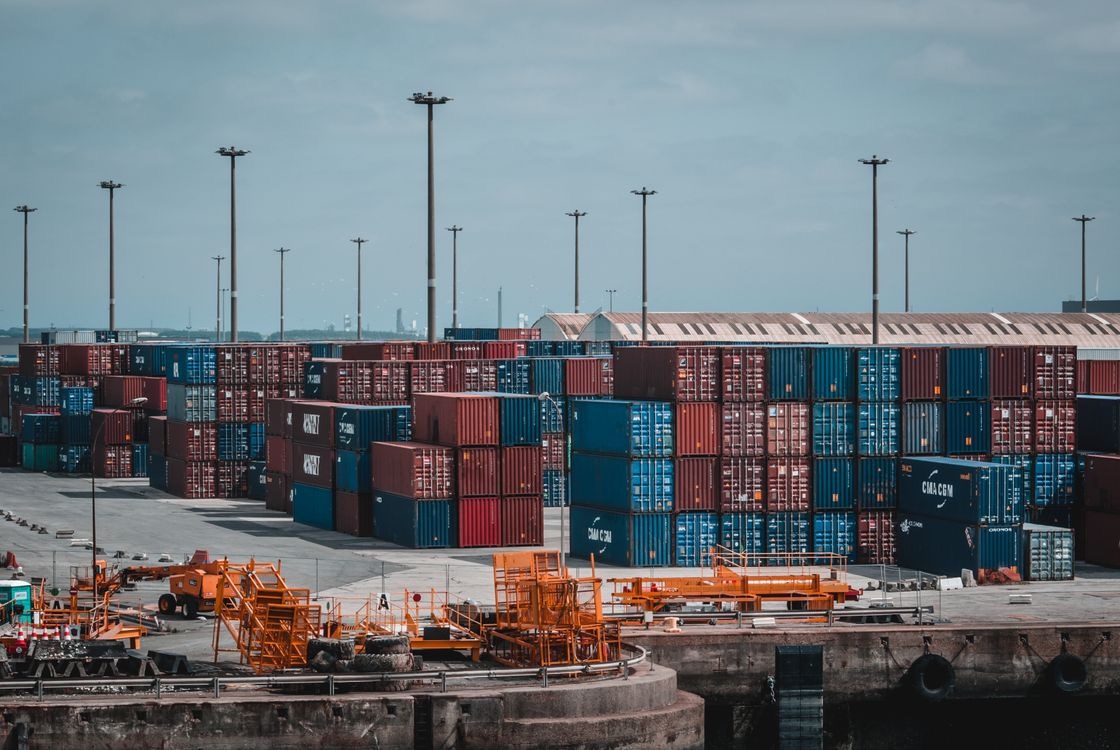
Once you know what's built into your lead time, shortening it stops being guesswork.
Break Down Your Lead Time
Start by breaking your total lead time into its individual pieces, supplier lead time, manufacturing lead time, and delivery lead time, and track each one separately instead of watching one blended number. Key manufacturing KPIs worth tracking on an ongoing basis include:
- Total customer lead time
- Supplier lead time by material category
- Lead time variability (not just the average, but how much it swings)
- On-time delivery rate
Build Resilience Into Critical Materials
From there, a handful of strategies tend to move the needle more than anything else. Dual sourcing critical materials means a single supplier's bad week doesn't become your bad month. Just-in-time inventory management, paired with realistic safety stock for the components that actually cause trouble, keeps production from stalling while avoiding the cash drag of overstocking everything.
Share Demand Forecasts Early
Sharing demand forecasts with suppliers ahead of time, instead of surprising them with a large order, tends to shave real days off procurement lead time because it gives suppliers room to plan rather than scramble.
Communicate Before Delays Become Problems
The other lever, and the one most companies skip, is communication itself. Calling a customer the moment a delay becomes likely, rather than waiting until the delivery date has already passed, turns a broken promise into a managed one. It costs nothing and it's the single cheapest form of risk mitigation in the entire supply chain.
How Wootz.work Manages Lead Times, Freight, Customs, and Delivery Risk
Most of what breaks a manufacturing lead time doesn't actually happen on the machine. It happens in the handoffs: a supplier that goes quiet, a container that sits at customs because a document didn't match, a shipment that clears the port but has nowhere to go because the trucking wasn't booked ahead of time.
Wootz.work was built around closing exactly those gaps, not just running a good factory floor.
That starts with how we structure a project. Our operating model runs through eight stages, from understanding the requirement and engineering the design, through orchestrating the right manufacturing capabilities, all the way to the final stage: export logistics, final delivery, and repeatable production capacity.
Logistics isn't an afterthought bolted onto the end of a manufacturing job. It's a stage we own with the same accountability as the machining or the quality inspection that came before it.
That ownership shows up in a few concrete ways.
- We run direct shipments rather than routing cargo through multiple intermediaries.
- We choose premium shipping lines deliberately rather than defaulting to whatever's cheapest that week, both decisions made specifically to protect delivery reliability over shaving a small percentage off freight cost.
- On documentation, the same engineering-led discipline that governs our quality inspections applies to export paperwork, because a customs hold caused by a mismatched invoice is just as damaging to a customer as a part that fails inspection.
- When a delay does become likely, whether it's a freight market swing, a port congestion issue, or a supplier running behind, we flag it before the customer has to ask. Silence is what actually breaks trust in manufacturing logistics, not the delay itself, and it's the one variable we can control entirely on our end regardless of what the ocean freight market or a customs desk decides to do that week.
If you're evaluating a manufacturing company for a program that needs both engineering depth and delivery reliability, our expert engineering control and proactive logistics management is the gap Wootz.work was built to close.
Make Your Manufacturing Lead Times More Predictable
From supplier coordination to production and delivery, Wootz.work manages the moving parts behind your order so you have clear timelines, documented quality checks, and one team accountable for getting your parts where they need to be.
Talk to Our EngineersFrequently Asked Questions
What is manufacturing logistics?
Manufacturing logistics is the planning and coordination of materials, components, finished goods, transportation, warehousing, and information as products move through the manufacturing process and toward the customer. It connects procurement, production, inventory, shipping, and delivery into one flow.
What is the difference between manufacturing logistics and supply chain management?
Manufacturing logistics focuses on the movement and timing of materials and products through production and delivery, while supply chain management covers the broader network of suppliers, manufacturers, distributors, customers, and related planning decisions.
How does manufacturing logistics affect lead time?
Manufacturing logistics can add significant time between production and delivery through material availability, transportation, customs clearance, warehousing, and handoffs. Tracking each stage separately helps identify where lead time is actually being lost.
How can manufacturers reduce logistics lead time?
Manufacturers can reduce logistics lead time by improving demand forecasting, qualifying reliable suppliers and carriers, preparing export documentation early, optimizing shipment planning, and building appropriate buffers for stages with high variability.
How do you manage logistics when manufacturing overseas?
Overseas manufacturing requires production and logistics to be planned as one timeline. Manufacturers need to account for supplier lead times, production, inspection, packaging, freight, customs, and final delivery when setting customer commitments rather than treating shipping as a separate step.
What is manufacturing lead time?
Manufacturing lead time is the total time between an order being confirmed and the finished product being ready to ship. It includes sourcing materials, production, quality inspection, and packaging, but not the time it takes to actually transport the finished goods to the customer.
How do you calculate manufacturing lead time?
The most common formula is Manufacturing Lead Time = Pre-Production Time + Processing Time + Post-Production Time + Buffer Time. Add up the days each stage takes, from sourcing through packaging, and include a buffer for the delays that inevitably show up somewhere in the process.
What is the difference between lead time and cycle time?
Cycle time is the time to produce one unit once work has actually started on it. Lead time is the entire span from order to delivery, including all the waiting, queuing, and shipping that cycle time doesn't cover. Cycle time is always a smaller number that lives inside the larger lead time figure.
What does manufacturing lead time include?
Manufacturing lead time typically includes order preparation time, queue time before a machine is available, setup time, actual run time, move time between production steps, inspection time, and put-away or packaging time. Some companies also fold procurement time for raw materials into this figure.
What is customer lead time?
Customer lead time is the number a business actually quotes to a buyer: the days between the order being confirmed and the product shipping from the warehouse or factory. It's the promise the sales team makes, and it should be built from real manufacturing and procurement data rather than a rough guess.
What is a delivery lead time example?
If a factory finishes a production run on a Monday and the finished goods clear customs and arrive at the customer's warehouse 21 days later, the delivery lead time is 21 days. It covers only the transportation and clearance leg, separate from the time spent actually manufacturing the product.
Why is it called lead time?
"Lead" works the same way it does in phrases like "lead time to takeoff." It describes the head start, or runway, a process needs before it can reach its finish line, in this case, the delivery date.
What is lead time in supply chain management?
In a supply chain context, lead time is the combined total of every stage's individual lead time: how long a supplier takes to deliver raw material, how long manufacturing takes, and how long delivery takes. Stack those together and you get the cumulative lead time a customer actually experiences.
How does Odoo calculate manufacturing lead time?
Odoo uses several linked fields: customer lead time, manufacturing lead time, manufacturing security lead time, sales security lead time, and vendor lead time. It works backward from a promised delivery date, subtracting each of these in sequence to figure out when a manufacturing order or purchase order needs to start.
How does SAP calculate manufacturing lead time?
SAP typically pulls this from the material master's MRP2 view, either using a fixed in-house production time field for basic date scheduling, or a more precise lead time scheduling method that draws queue, setup, run, and move times directly from the production routing.
What is a normal manufacturing lead time?
It varies significantly by industry and complexity. Standardized parts using existing tooling can ship in 15 to 25 days, while electronics or highly engineered components with long component lead times and testing protocols can run 45 to 90 days or more.
How can you shorten lead times?
Dual source critical materials so one supplier's delay doesn't stall the whole order, share demand forecasts with suppliers ahead of time, track lead time variability and not just the average, and communicate proactively the moment a delay becomes likely rather than after the delivery date has already passed.
How does international shipping affect manufacturing lead time?
International shipping adds freight, customs clearance, port handling, and inland transportation to the manufacturing timeline. These stages should be treated as separate sources of lead-time variability rather than assuming the quoted production time represents the full delivery schedule.
How do you measure lead time variability?
Track the actual lead time for each order over time and compare the spread around the average, rather than looking only at the mean. Measures such as minimum, maximum, median, and on-time delivery rate can reveal whether a supplier or process is consistently predictable.
What KPIs should manufacturers use to track lead time?
Useful lead-time KPIs include total customer lead time, supplier lead time, manufacturing lead time, delivery lead time, lead-time variability, on-time delivery rate, and the percentage of orders delivered within the original commitment.
How can manufacturers improve on-time delivery?
Improving on-time delivery usually starts with identifying where schedules slip, using realistic lead-time commitments, qualifying reliable suppliers, maintaining appropriate buffers, and communicating potential delays before they affect the promised delivery date.

.svg)