Rust is a slow, expensive failure that eats into steel from the surface down, and recent estimates based on GDP figures put the direct cost of corrosion to the global economy at well above $3 trillion a year, with total costs topping $6.5 trillion.
For a fabrication shop, this could show up as failed welds, warped panels, and equipment pulled offline years before its design life ends.
The good news is that rust is preventable. Steel does not have to corrode if it gets the right surface treatment before it ever leaves the shop floor. This guide breaks down seven proven ways to stop rust before it starts, compares their strengths, and tells you which one fits which job.
What Causes Rust on Steel?

Rust forms when iron in steel reacts with oxygen and moisture. This reaction, called oxidation, creates iron oxide, the reddish flaky layer everyone recognizes as rust. Unlike the zinc patina on galvanized steel, rust does not protect the metal underneath. It keeps eating deeper.
Three things speed up this reaction:
- humidity,
- salt, and
- industrial pollutants like sulfur dioxide.
That is why steel corrodes faster near coastlines and inside chemical plants than it does in a dry warehouse in Arizona. Every coating on this list works by blocking one or more of these triggers from reaching bare steel.
How to Prevent Rust on Steel: 7 Protective Coatings and Treatments
While there are numerous ways to prevent rusting on steel, here are some of the most effective and popular ones.
1. Hot-Dip Galvanizing
Hot-dip galvanizing dips steel into a bath of molten zinc, usually around 830°F. The zinc bonds to the steel at a metallurgical level, not just a surface level, which is why the coating survives rough handling on construction sites and factory floors.
This process follows ASTM A123, the standard that sets minimum coating thickness based on the steel's category and gauge. Thicker coatings last longer, and in industrial environments, hot-dip galvanized steel can go 72 to 73 years before it needs its first maintenance. Even if the coating gets scratched, the surrounding zinc sacrifices itself to protect the exposed steel, so a single scuff does not spread into a rust patch.
Best for: structural beams, guardrails, outdoor equipment, and anything that will sit outside for decades without regular repainting.
So if your project involves structural steel that will face weather for 20 years or more, specify hot-dip galvanizing to ASTM A123 by name in your purchase order. Do not just ask for galvanized, because coating thickness varies and the difference between a thin coat and a thick one can mean decades of service life.
2. Zinc Electroplating
Zinc electroplating uses an electric current to deposit a thin, even layer of zinc onto steel. It is a cold process, so it does not warp thin or precision parts the way hot-dip galvanizing sometimes can. The coating is also much thinner, which keeps threaded fasteners and tight-tolerance components within spec.
The governing standard here is ASTM B633, which defines coating types, thickness classes, and salt spray performance. A basic Type I finish without extra treatment needs to survive at least 48 hours before white corrosion appears and 96 hours before red rust shows up. Adding a chromate conversion coating on top pushes that resistance even higher without adding real thickness.
Best for: nuts, bolts, brackets, and small precision hardware where dimensional accuracy matters more than raw coating thickness.
When specifying plated fasteners, always name the ASTM B633 service condition (SC1 through SC4) instead of just saying zinc plated. A part rated SC4 for chassis hardware exposed to road salt will outlast an SC2 part meant for indoor use, and mixing them up is a common and costly mistake.
3. Powder Coating
Powder coating sprays a dry polymer resin onto steel using an electrostatic charge, then bakes it in a curing oven until it melts into a smooth, hard shell. Unlike paint, it contains almost no solvents, so it releases very few volatile organic compounds during application, which makes it one of the more environmentally friendly coating options on this list.
The coating works as a pure barrier. It has no sacrificial properties like zinc, so if the surface gets cracked or chipped, moisture can creep underneath and start corroding the bare steel hidden below. That single limitation is why powder coating alone is rarely the right call for steel that takes heavy impact or abrasion.
If the part will live indoors or under a roof, powder coating gives you the widest color range and the cleanest finish for the lowest cost. If it will sit outside and take real abuse, pair it with a galvanized base coat instead of using powder coating on its own.
Best for: indoor equipment, storage racks, railings, workbenches, and any product where color and finish matter as much as protection.
4. Passivation for Stainless Steel
Passivation is a chemical treatment specifically for stainless steel, not carbon steel. During machining, welding, or handling, tiny particles of free iron can embed themselves in the stainless surface. Those particles rust, even on a stainless part, because they are not protected by the chromium oxide layer that gives stainless steel its name.
Passivation removes that free iron and helps the chromium oxide layer rebuild itself across the whole surface. ASTM A967 governs this process and allows two acid options: nitric acid, the traditional method, and citric acid, a gentler alternative that produces far less hazardous waste. Both are followed by tests like salt spray and copper sulfate exposure to confirm the treatment actually worked.
Best for: stainless steel fabrications in food processing, medical devices, and pharmaceutical equipment, where any rust spot is a contamination risk.
Never assume stainless steel is rust-proof straight off the machine. Ask your fabricator whether passivation was performed and to which ASTM A967 method, especially for parts that touch food, water, or sterile environments.
5. Zinc-Rich Primers and Cold Galvanizing
Zinc-rich primers, sometimes called cold galvanizing, are paints loaded with metallic zinc dust. They are brushed or sprayed on rather than dipped in a molten bath, which makes them the practical choice for repair work, field touch-ups, and structures too large to fit in a galvanizing kettle.
These primers give some of the same sacrificial protection as hot-dip galvanizing, since the zinc particles can still corrode in place of the steel underneath. The protection is weaker and shorter-lived because the coating is thinner and the zinc particles are not metallurgically bonded to the steel. Think of it as a strong second choice rather than a substitute for true galvanizing.
Some keep a zinc-rich primer on hand for any site where welding or drilling breaks through an existing galvanized coating. Touching up the bare spot immediately stops rust from creeping in at the exact point where protection was lost.
Best for: repairing scratches or welds on already-galvanized steel, and coating structures too large or oddly shaped for a galvanizing bath.
6. Thermal Spray Coating (Metallizing)
Thermal spray coating, also called metallizing, melts a metal wire or powder, usually zinc, aluminum, or a blend of both, and sprays it onto the steel surface using a flame or electric arc. The metal solidifies on contact, building up a dense, adherent layer without dipping the whole part in a bath or applying heat that could warp it.
This process is popular for massive structures that cannot be moved to a galvanizing kettle, like bridges, offshore platforms, and storage tanks. It also allows for selective coating, so you can protect just the sections exposed to weather while leaving the rest untouched. Zinc-aluminum thermal spray blends in particular are gaining ground because they combine zinc's sacrificial protection with aluminum's barrier durability.
For massive or fixed steel structures where hot-dip galvanizing is not physically possible, ask your fabricator about thermal spray metallizing as an on-site alternative. It delivers galvanizing-level protection without needing to move the structure at all.
Best for: large fixed structures, on-site repairs to existing steel assets, and marine or offshore equipment that cannot be transported.
7. Rust-Inhibiting Oils and Corrosion-Preventive Coatings
Rust-inhibiting oils and vapor corrosion inhibitors provide temporary protection rather than a permanent finish. They work by forming a thin molecular film on the steel surface that blocks moisture and oxygen from making contact, or by releasing a vapor inside sealed packaging that keeps humidity away from the metal.
This category is the go-to solution during storage, shipping, and machining, when a part is not yet in its final application and does not need a permanent coating. It buys time between manufacturing and final finishing, which matters a lot when parts sit in a warehouse for months before assembly. It should never be treated as a long-term rust prevention strategy on its own.
Best for: in-process storage, overseas shipping, and machined parts waiting for their final coating step.
You can build a corrosion-preventive oil or VCI packaging step into your process for any steel that sits between machining and final finishing for more than a few weeks.
A Cheatsheet to Choosing the Right Treatment to Prevent Rust on Steel
| Coating / Treatment | How It Works | Governing Standard | Best For | Key Limitation |
|---|---|---|---|---|
| Hot-Dip Galvanizing | Steel is dipped in molten zinc (~830°F), forming a metallurgically bonded, sacrificial coating | ASTM A123 | Structural steel, guardrails, outdoor equipment | Limited to parts that fit in the galvanizing kettle; finish is silver/gray only |
| Zinc Electroplating | Electric current deposits a thin, even zinc layer on the steel surface | ASTM B633 | Nuts, bolts, brackets, precision hardware | Thin coating means less sacrificial protection; not suited to large structural steel |
| Powder Coating | Dry polymer resin is electrostatically applied, then cured in an oven into a hard shell | No single dedicated ASTM corrosion standard; performance tested via salt spray methods like ASTM B117 | Indoor equipment, racks, railings, workbenches | Pure barrier protection only; a scratch or crack lets moisture reach bare steel with no sacrificial backup |
| Passivation (Stainless Steel) | Chemical treatment (nitric or citric acid) removes free iron and rebuilds the chromium oxide layer | ASTM A967 | Food processing, medical devices, pharmaceutical equipment | Only works on stainless steel; does nothing for carbon steel |
| Zinc-Rich Primers / Cold Galvanizing | Paint loaded with metallic zinc dust, brushed or sprayed on | Commonly referenced for repairing damaged hot-dip galvanized coatings | Field touch-ups, repairs, oversized structures that can't be dipped | Zinc particles are not metallurgically bonded, so protection is weaker than true galvanizing |
| Thermal Spray Coating (Metallizing) | Molten zinc, aluminum, or a blend is sprayed onto steel using a flame or electric arc | Performance evaluated through standard salt spray and adhesion testing | Bridges, offshore platforms, storage tanks, large fixed structures | Requires skilled on-site application; coating quality depends heavily on operator technique |
| Rust-Inhibiting Oils / Corrosion-Preventive Coatings | Thin molecular film or vapor inhibitor blocks moisture and oxygen from reaching the steel | No fixed ASTM corrosion-life standard; used for in-process protection only | In-process storage, shipping, machined parts awaiting final coating | Temporary by design; not a substitute for permanent coating |
Powder Coating vs Galvanizing: Which One Actually Wins?
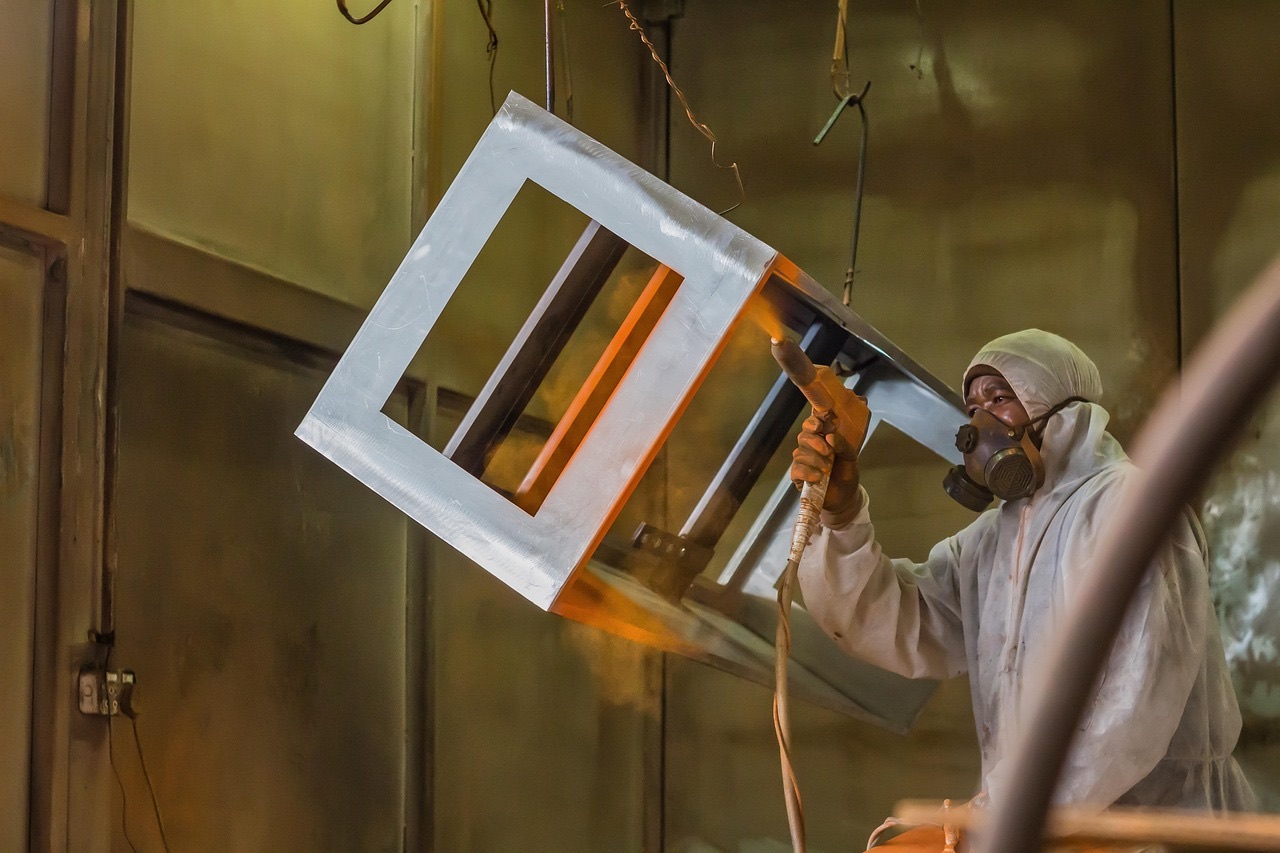
Galvanizing protects through a sacrificial zinc layer that keeps working even after a scratch, while powder coating protects through a pure barrier that fails once it is breached. That single difference explains most of the debate.
For anything permanently outdoors, in a coastal zone, or exposed to constant moisture, galvanizing wins on raw corrosion resistance and lifespan, often lasting decades longer than a powder-coated equivalent. For indoor equipment, architectural finishes, or anything where color and appearance carry real value, powder coating wins on cost, aesthetics, and environmental impact. Many fabricators now combine both in a duplex system, galvanizing the steel first and powder coating over it, which delivers the sacrificial protection of zinc with the color and finish options of powder coat.
But make sure to not choose based on cost alone. Map out where the part will actually sit for its working life, and if it is outdoors and permanent, budget for galvanizing or a duplex system even though the upfront cost is higher.
How Do You Choose the Right Anti-Rust Coating for Your Steel Project?
- Start with the environment, not the budget. A part sitting in a dry indoor warehouse has completely different needs than one bolted to an offshore platform, and picking a coating before you know the environment almost always leads to premature failure.
- Next, think about the part's shape and size. Small, threaded, or precision components usually call for zinc electroplating because it keeps tolerances tight. Large structural steel calls for hot-dip galvanizing or thermal spray, since a bath or spray gun can cover surfaces a plating tank cannot reach.
- Finally, factor in maintenance access. If the steel will be buried, embedded in concrete, or otherwise impossible to repaint later, invest in the most durable coating available up front. If it is easy to inspect and touch up, a lighter coating paired with a maintenance schedule can be the more cost-effective choice over the structure's lifetime.
Before requesting quotes from any fabricator, write down three things:
- The environment (indoor, outdoor, coastal, industrial)
- The part's function (structural, fastener, precision component)
- How often you can realistically inspect or repaint it
Those three answers narrow the seven options down to one or two realistic choices almost immediately.
Prevent Rusting on Steel & Increase Lifespan
Rust is predictable, which means it is also preventable. The coating you choose today decides whether your steel needs attention in 5 years or in 50.
Wootz.work works through that decision with manufacturers before a single part hits the shop floor, matching coating to environment, budget, and design life so the steel does its job without surprises.
Pick the Right Coating to Prevent Rust
Our fabrication team helps manufacturers choose and specify the correct rust prevention treatment for their environment, budget, and design life, before production starts.
Consult an EngineerFrequently Asked Questions
What is the difference between galvanized and zinc plated steel?
Galvanized steel is dipped in molten zinc, which creates a thick, metallurgically bonded coating that fuses to the steel itself rather than just sitting on top of it. Zinc plated steel goes through electroplating instead, which uses an electric current to lay down a much thinner layer of zinc.
The thickness difference matters more than people expect, since it directly controls how long the sacrificial protection lasts before the coating runs out.
What is the difference between galvanizing and electroplating?
Galvanizing is a hot, dip-based process that builds a thick coating. Electroplating is a cold, current-based process that builds a thin, precise coating, which is why it suits threaded fasteners and small parts better.
Galvanizing works well when you want maximum protection on large steel and can tolerate a slightly rougher, spangled finish, while electroplating works well when tight dimensional tolerances matter more than raw coating thickness.
Is stainless steel better than galvanized steel for outdoor use?
Not automatically. Stainless steel resists corrosion because of its chromium content, not a coating, so it never needs recoating, but it costs significantly more than galvanized steel and still needs the right grade for the environment.
A lower grade like 304 stainless can still corrode in a coastal or industrial setting, so picking stainless does not automatically solve the corrosion question. The real comparison is grade-specific stainless against galvanizing for your exact environment.
What is the best rust proof coating for outdoor metal?
Hot-dip galvanizing is generally the strongest option for long-term outdoor exposure because of its sacrificial protection and multi-decade lifespan.
What is the cheapest way to rust proof metal?
Rust-inhibiting oils and basic primers are the cheapest option, but they are also the shortest lived and work best as temporary protection, not a permanent fix. They make the most sense during machining, storage, or shipping, when a part is not in its final form yet and does not need a decades-long coating.
Using them as a permanent solution on a finished product usually backfires, since the film wears off faster than most people expect and rust starts underneath before anyone notices.
How do you stop steel from rusting outside?
Apply a coating rated for outdoor exposure, such as hot-dip galvanizing or a galvanize-plus-powder-coat duplex system, and design the part so water can drain instead of pooling on the surface. Coating choice only solves half the problem.
A well-coated part with a flat surface that collects standing water will still corrode at that exact spot faster than the rest of the structure, so drainage and coating decisions need to happen together, not separately.
What is the most effective coating to prevent rust on steel?
Hot-dip galvanizing is generally considered the most effective long-term option for outdoor and structural steel, since the zinc layer bonds metallurgically to the steel and keeps protecting it sacrificially even after a scratch. For indoor parts or where appearance matters more than decades of exposure, powder coating or zinc electroplating can be just as effective and far more cost efficient.
How long does galvanized steel last before it rusts?
In a typical industrial environment, hot-dip galvanized steel can go 72 to 73 years before needing its first maintenance, and even longer in rural or low-pollution areas. The exact lifespan depends on the zinc coating thickness, which is why the ASTM A123 specification matters so much when ordering.
Can powder coating stop rust as well as galvanizing?
Powder coating resists rust very well as long as the coating stays intact, but it offers no sacrificial protection if it gets scratched or cracked. Galvanizing continues protecting exposed steel through sacrificial corrosion even after damage, which is why it generally outperforms powder coating alone in harsh outdoor environments.
Does stainless steel need rust protection?
Yes, stainless steel needs passivation to reach its full corrosion resistance, especially after machining or welding leaves free iron particles embedded in the surface. Without passivation to ASTM A967, those embedded particles can rust even though the surrounding stainless steel does not.
What is the cheapest way to prevent rust on steel?
Rust-inhibiting oils and zinc-rich primers are the least expensive options, but they offer the shortest protection window and work best as temporary or touch-up solutions. For genuine long-term protection at a reasonable cost, zinc electroplating usually offers the best balance between price and durability for small to mid-sized components.
How do I know which rust prevention coating my project needs?
Match the coating to the environment first, since a part exposed to weather, salt, or chemicals needs far more protection than one sitting indoors. From there, factor in the part's size, precision requirements, and how easily it can be inspected or repainted, and those variables will usually point to one clear choice among the seven options above.
Choosing the right coating is only half the job. Getting it applied correctly, to the right ASTM standard, with the right thickness, takes real fabrication expertise. That is the kind of work our team at Wootz.work handles daily, turning complex material and coating decisions into steel that holds up long after the job is done.
How often should you reapply rust prevention coating?
It depends entirely on the coating. Rust-inhibiting oils may need reapplication every few months, painted systems every 5 to 10 years, and hot-dip galvanizing can go decades without any touch-up at all.
This is one of the biggest hidden costs in a corrosion protection decision, since a cheaper coating with frequent reapplication can cost more over a structure's life than a pricier one that gets specified once and forgotten.
What happens when galvanized coating wears off?
The exposed steel behaves exactly like uncoated steel and starts rusting normally, since it no longer has zinc nearby to sacrifice itself. The good news is that this rarely happens all at once. Zinc depletes gradually over years, so there is usually a visible warning period where the coating looks thin or dull before bare steel actually starts showing through.
Why does stainless steel rust?
Usually one of two reasons: embedded free iron from machining or fabrication that was never passivated, or the wrong stainless grade for a chloride-heavy environment. Both are avoidable with the right process upfront, which is exactly why passivation and grade selection deserve real attention instead of being treated as an afterthought.
Can rust spread under powder coating?
Yes, if the coating is cracked, chipped, or punctured. Moisture gets into the gap and corrodes the steel underneath, and the rust can spread invisibly under the intact coating around it. This is the main reason powder coating alone is a risky choice for parts that take regular impact or abrasion, since a small chip can hide a much bigger problem developing beneath the surface.
If you want to prevent such rusting issues, please contact Wootz.work before your fabrication process to get insights and guidance.
What causes white rust on galvanized steel?
Zinc reacts with trapped moisture in a low-airflow environment, before it has a chance to convert into the stable zinc carbonate patina that normally protects the coating.
How do you remove rust from steel before coating?
Abrasive blasting, acid pickling, or wire brushing, depending on the part size and how much rust has already formed. Any coating applied over incompletely cleaned steel will fail early.
Abrasive blasting tends to give the best surface profile for coating adhesion, which is why most fabrication shops default to it for anything beyond light surface rust on small parts.
What is the best rust prevention for steel in coastal areas?
A duplex system, meaning galvanized steel with a powder coat or paint topcoat, since coastal salt air corrodes faster than almost any other environment and benefits from layered protection.
Relying on a single coating in a coastal setting is one of the more common specification mistakes, since salt air can work through even a well-applied single coating faster than most people expect.
What is the best coating for steel exposed to saltwater?
Thermal spray zinc-aluminum coatings or a hot-dip galvanize plus paint duplex system tend to perform best in direct saltwater or splash-zone exposure. Direct saltwater contact is one of the harshest environments steel can face, which is why marine and offshore projects tend to specify layered or metallized systems rather than relying on a single basic coating.

.svg)