The EU's Carbon Border Adjustment Mechanism went live January 1, 2026. If you export steel, aluminium, cement, fertilizer, or any of the other covered materials into Europe, there's now a carbon cost attached to every shipment.
Right now in 2026 that cost is small: just €244 on a standard 100-tonne steel order. But the same order in 2034 could carry €21,000 in additional costs. The EU phased it in this way on purpose, to give manufacturers time to map exposure, build emissions data, and restructure sourcing around carbon efficiency. So the right time to start planning for the CBAM is right now, when you just have to bear 2.5% of the liable amount.
What Is CBAM? And Why Does It Exist?
The Carbon Border Adjustment Mechanism (CBAM) is an environmental policy instrument through which the EU applies the same carbon costs to imported products as it applies to firms operating within the EU Indian Council of World Affairs. In simpler terms: if your manufacturing process emits carbon, and you export to Europe, you now pay for those emissions.
EU manufacturers operate under the EU Emissions Trading System. They pay for every tonne of CO₂ they emit, and that cost is baked into their production economics. An overseas manufacturer (in a country with weaker or no equivalent carbon pricing) pays nothing comparable. The result is a structural cost advantage for the offshore producer that has nothing to do with efficiency, skill, or scale. It is simply a carbon arbitrage.

CBAM closes that arbitrage. As the EU importer of record, you must purchase CBAM certificates, which are priced at the prevailing EU ETS carbon rate, proportional to the carbon embedded in the goods you are importing. Your supplier's carbon footprint is now your procurement cost.
CBAM was proposed in July 2021 as part of the EU's "Fit for 55" package, a comprehensive climate strategy targeting 55% emissions reduction from 1990 levels by 2030 and full climate neutrality by 2050. After a transitional reporting period from October 2023 to December 2025, the financial obligation phase began on January 1, 2026.
Currently covered sectors include:
- Iron and steel
- Aluminium
- Cement
- Fertilizers
- Hydrogen
- Electricity
But the scope is expanding rapidly. A December 2025 proposal from the European Commission seeks to add 180 additional product categories from January 2028, including car parts, domestic appliances, construction products, power transformers, cables, farming machinery, and industrial equipment, plus goods containing steel or aluminium as functional components like fasteners, fittings, and electrical cables.
Critically, CBAM also captures indirect emissions: the carbon embedded in the electricity consumed during production. A factory on a coal-heavy grid carries a higher CBAM cost than one running on renewables, even if the physical production process is identical. Geography and energy sources are now line items in your cost model.
The Maths Behind: How Is CBAM Calculated
As the EU importer of record, you must:
- Calculate embedded emissions in your imported goods (tonnes of CO₂ per tonne of product)
- Purchase CBAM certificates priced at the EU Emissions Trading System (ETS) rate (currently €60-70 per tonne CO₂)
- Submit quarterly declarations of imported goods and their emissions
- Surrender certificates annually matching the previous year's imports
The formula:
CBAM Cost = Product Tonnage × Emission Factor × EU Carbon Price
Here’s an example of how CBAM is calculated:
Steel components (100 tonnes): 100t × 1.5 tCO₂/t × €65/t = €9,750 full CBAM liability
Aluminium parts (50 tonnes): 50t × 8.0 tCO₂/t × €65/t = €26,000 full CBAM liability
How is the emission factor in CBAM determined?
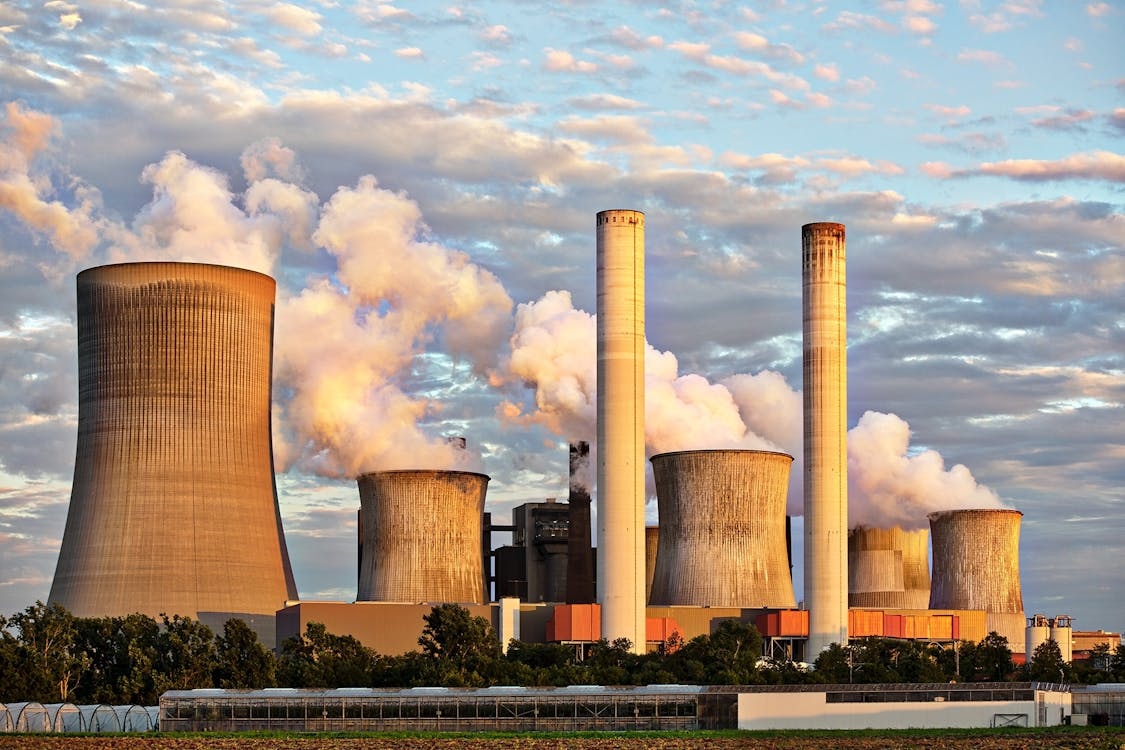
The emission factor is determined by the material and how it was made. Steel runs roughly 1.5–2.5 tCO₂ per tonne depending on production route. And aluminium varies dramatically from around 4 tCO₂ per tonne for recycled content produced with clean power to over 17 tCO₂ per tonne for primary aluminium smelted on a coal grid. So the process and power source matter more than the country of origin.
Where can the CBAM certificates be purchased?
CBAM certificates are purchased at the ETS price and surrendered annually for prior-year imports. Quarterly declarations are also required. The liability sits entirely with the EU importer of record and not the overseas manufacturer.
The Phase-In Timeline: 2026 Is Just the Beginning
Here's the critical point many are missing: 2026 obligations represent only 2.5% of full CBAM liability. The mechanism scales up dramatically:
- 2026: 2.5% obligation
- 2027: 5%
- 2028: 10%
- 2030: 48.5%
- 2034: 100% full carbon liability
From 2034, CBAM certificates will cover 100% of embedded emissions, and no free allocation will be given under the EU ETS for these goods.
This 2026 obligation is minimal by design: the EU built in a runway for adjustment. But the schedule is legislated, the trajectory is fixed, and there is no mechanism for extension. What costs your business a few hundred euros per shipment today will cost tens of thousands per shipment by the early 2030s, on the same volumes, from the same suppliers.
This is why two manufacturers making the identical product can carry very different CBAM costs depending on what powers their factory.
Same product, same order, but the €91,000 difference is driven entirely by how the factory is powered. This is why it’s important to start restructuring and planning right now in 2026 while that gap is still small enough to rethink your suppliers without real cost pressure.
How Is the CBAM’s Scope Expanding
On April 10, 2026, the European Parliament's Committee on the Environment proposed extending CBAM to around 180 additional steel and aluminium-based manufactured products from January 1, 2028, including fabricated metal products, tubes, pipes, fasteners, structural components, machinery parts, aluminium containers, and other semi-finished and finished engineering goods. Car parts, domestic appliances, construction products, power transformers, cables, and industrial equipment are all in the frame.
This moves CBAM deep into the manufacturing value chain. From January 2028, exporters of engineering goods, auto components, fabricated metal products, machinery, aluminium manufactures, and other industrial goods may increasingly face a carbon tax when exporting to Europe.
Three additional tightening measures in the proposal:
- No carbon credit offset: The draft opposed allowing international carbon credits for CBAM compliance, which means exporters will not be able to use carbon credits bought in voluntary or international markets to reduce their CBAM liabilities
- Stricter scrap accounting: Pre-consumer scrap emissions must now be included in calculations
- Electricity emissions mandatory: Grid emissions become part of the carbon footprint calculation, which substantially increases calculated carbon content for any manufacturer relying on grid power from coal or gas
The expansion is expected to bring an additional 7,500 importers into compliance scope across Europe. If you manufacture or source precision hardware, engineered components, or fabricated assemblies for European customers, you are very likely looking at direct CBAM exposure within 24 months.
Who Is Affected By CBAM?
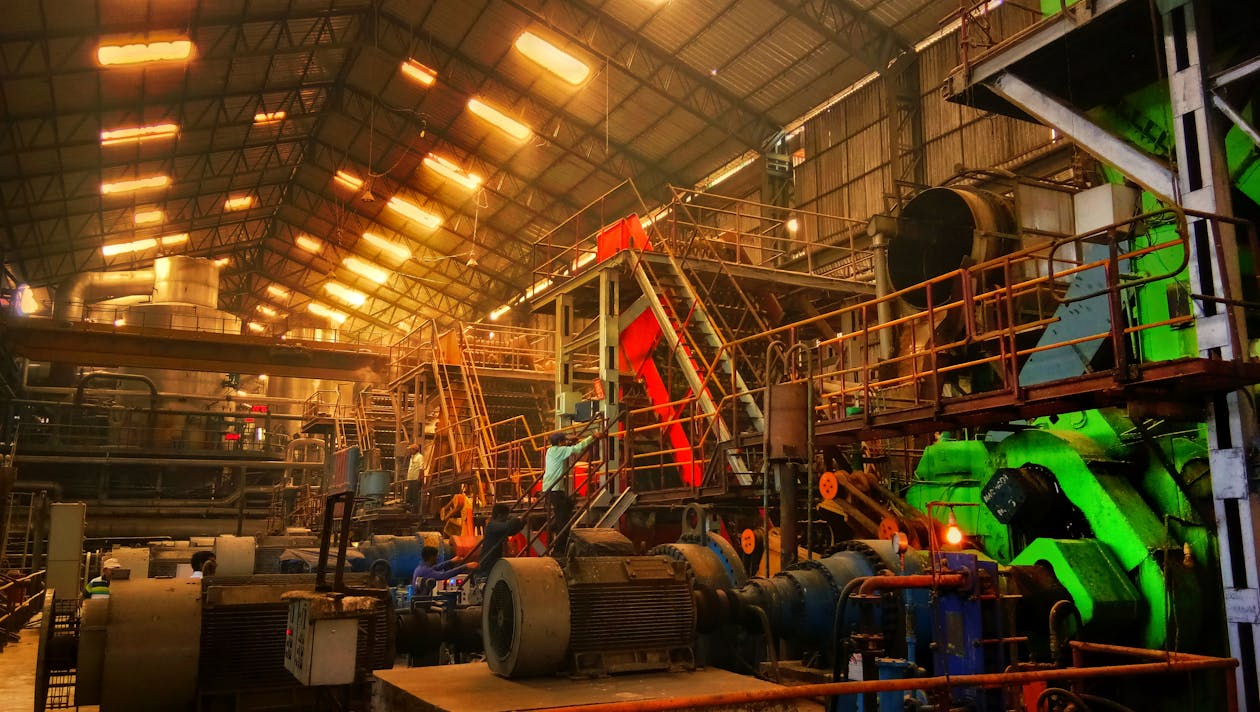
CBAM applies to every non-EU exporter whose production is carbon-intensive relative to EU ETS standards. It is not targeted at any one country. It is a charge on the carbon intensity of the product, regardless of where it was made.
That said, exposure varies considerably depending on where goods are produced and how. Manufacturers operating in countries with no equivalent carbon pricing, relying on coal-based electricity, or using carbon-intensive production routes face the highest bills. Manufacturers who can demonstrate low embedded carbon, through cleaner energy sources, efficient processes, or verified low-carbon raw materials, face substantially lower liability, regardless of geography.
This is the key strategic insight: CBAM is not a geography problem. It is a carbon intensity problem. And carbon intensity can be managed.
Countries including China, Turkey, Vietnam, India, and others across Southeast Asia and the Middle East are all major exporters of CBAM-covered goods to the EU. None currently operate carbon pricing mechanisms deemed equivalent to the EU ETS. The UK operates its own ETS post-Brexit, but it is not linked to the EU system, and UK exporters of covered goods remain subject to CBAM charges.
Each of these exporting regions faces the same fundamental calculus: the carbon embedded in the goods they ship to Europe now carries a price.
What Should Manufacturers Do Right Now to Manage CBAM
There’s no right time as the present to tackle the challenges with CBAM. With just 2.5% liability, you have time to restructure your infrastructure, like supplier relationships and contract structures, that will give you more competitive advantage when full liability hits.
1. Map Your Full CBAM Exposure Today
Calculate what 100% CBAM liability looks like at current EU carbon prices for your entire export portfolio to Europe. Use the 2.5% obligation in 2026 as a runway to prepare and strengthen relationships with plans chalked out to 2030.
2. Build Emissions Data Infrastructure
Relying on default emission values attracts a 30% surcharge from 2028. So start capturing actual emissions data now:
- Direct emissions from production processes
- Electricity consumption and source
- Raw material origins and their embedded carbon
- Transportation emissions
Building accurate, auditable emissions data takes 12-18 months for most manufacturers, so start as soon as possible.
3. Optimize Supply Chains for Carbon, Not Just Cost
Traditional offshore sourcing is optimized for labor cost and MOQs. CBAM-era sourcing optimizes for:
- Raw material carbon intensity: Where did the steel/aluminum originate? How was it produced?
- Energy sources: Coal-powered vs. renewable energy manufacturing
- Production efficiency: Modern equipment with lower emission factors
- Traceability: Full documentation of carbon at every supply chain stage
4. Consider Manufacturing Footprint Restructuring
For manufacturers shipping high volume into Europe, sourcing structure itself is worth revisiting. Some companies are setting up final assembly inside the EU. It doesn't eliminate CBAM on the components coming in, but it can significantly reduce the dutiable carbon content of the finished goods.
Others are shifting production to manufacturing partners in regions with cleaner energy grids: the same part made in a hydro-powered facility versus a coal-powered one can carry a CBAM cost that's four times lower, and that gap only widens as the phase-in accelerates.
Another approach is multi-sourcing by splitting orders across suppliers in a way that actively manages your carbon exposure rather than just your unit cost.
None of these are overnight moves. They involve supplier qualification, tooling, and lead time. That's exactly why 2026 is the right time to start mapping them, not 2028 when the obligation is already above 10% and your options are narrower.
What CBAM-Ready Sourcing Looks Like
Forward-thinking manufacturers and procurement teams are already restructuring:
- Multi-factory carbon optimization: Allocating production across manufacturing partners to achieve the optimal balance of cost and carbon efficiency, with tracking at every stage.
- Raw material sourcing strategy: Choosing origins with lower embedded CO₂—high-efficiency smelters, renewable-powered facilities, recycled content with documented provenance.
- Full documentation per shipment: Embedded-carbon data for every order, covering everything needed for quarterly declarations and annual certificate surrender.
- Continuous optimization: As the phase-in accelerates toward 2034, continuously adjusting sourcing to minimize exposure while preserving the cost advantage.
The Current Window Is Open
There is a version of this story that looks different depending on when you start. The CBAM obligation in 2026 is 2.5%. The infrastructure cost of building emissions data, restructuring supplier relationships, and negotiating carbon-efficient sourcing is the same whether you begin now or in 2028. But the runway to absorb it is not.
For manufacturers exporting to the EU, the current moment is important. The mechanism is live and the rules are clear, but the financial pressure is still low enough that decisions made now are strategic rather than reactive.
Suppliers who can document clean production, operate on renewable grids, and provide full carbon traceability are worth more to an EU buyer today than they were two years ago. And they will be worth considerably more still by 2030.
The Bottom Line
CBAM represents a permanent shift in the economics of global manufacturing trade. The 2.5% obligation in 2026 is deceptive; by 2030, it will exceed 40%, and by 2034, it reaches 100%. Industry estimates suggest that by 2030, most industrial products entering the EU could potentially face some form of carbon tax exposure.
For manufacturers exporting to Europe, the question isn't whether to adapt, but how quickly. Start mapping exposure now, build emissions data infrastructure, and restructure supply chains around carbon efficiency. The companies that treat CBAM as a strategic priority today will have a decisive competitive advantage by 2028.
FAQs

.svg)