Sheet metal manufacturing sits at the center of modern fabrication. If you open almost any machine, appliance, vehicle, or an industrial system, you’ll find at least one component made from sheet metal, be it a bracket, a panel, a housing, or a frame.
The reason is simple: sheet metal fabrication offers a rare combination of precision, strength, manufacturability, and scalability.
Today, the sheet metal manufacturing process is no longer a collection of manual steps. It’s a digitally connected workflow that integrates CNC programming, automated cutting, controlled forming, and weld-quality monitoring into a repeatable system to produce metal parts with tight tolerances at high speed.
What Is Sheet Metal Manufacturing?

Sheet metal manufacturing is the process of turning flat metal sheets into functional parts by cutting, forming, bending, joining, and finishing them. It’s the workflow behind enclosures, brackets, frames, HVAC ducts, control panel housings, battery trays, chassis, cabinets, and a wide range of industrial components used across different sectors.
Modern sheet metal fabrication uses CNC laser cutters, robotic benders, press brakes, automated weld cells, and CAM-driven workflows to keep tolerances tight and cycle times predictable.
Sheet metal is commonly processed in thicknesses between 0.5 mm to 25 mm, depending on the application. Most sheet metal manufacturing companies maintain tolerances around ±0.1 mm to ±0.5 mm using CNC laser cutting and automated bending to deliver even tighter control for complex assemblies.
Why Is Sheet Metal Preferred for High-Precision Assemblies?
Sheet metal parts are widely preferred because of their precision, manufacturability, cost efficiency, and design flexibility.
- Ideal for rapid prototyping: Flat patterns can be cut, bent, and tested quickly without expensive tooling.
- High strength-to-weight ratio: Especially valuable in automotive, aerospace, and machine frames.
- Supports both small batches and mass production: Once the flat pattern is validated, scaling is straightforward.
- Easy to recycle: Steel, stainless steel, and aluminum can be reused with minimal loss of properties.
For OEMs, it’s practical enough to adapt to fast design cycles and a wide variety of mechanical and structural needs.
What are the Four Core Processes in Sheet Metal Manufacturing
Sheet metal fabrication has four main processes: cutting, forming, joining, and surface finishing. It starts with cutting the metal into precise dimensions, bending and forming them into three-dimensional shapes, joining different sheet metal parts together to form the final product, and finally finishing them with the right method based on the environmental requirements.
1. Cutting
Cutting is the first and most defining step in sheet metal manufacturing, as it determines the accuracy of every subsequent operation.
When a sheet is cut cleanly with a controlled kerf and minimal heat distortion, downstream processes become predictable. Bends are smooth and rounded with precision, weld gaps remain consistent, and the sheet metal parts stay dimensionally stable through the rest of the workflow.
A well-executed cutting process determines the cost, cycle time, and manufacturability of the entire part. Scrap rates, weld alignment, and even surface finishing later on all depend on this first step.
What are the types of cutting in sheet metal manufacturing?
There are four common cutting methods used based on material type, thickness, cost, and tolerance requirements: laser cutting, plasma cutting, waterjet cutting, and shearing.
Laser cutting
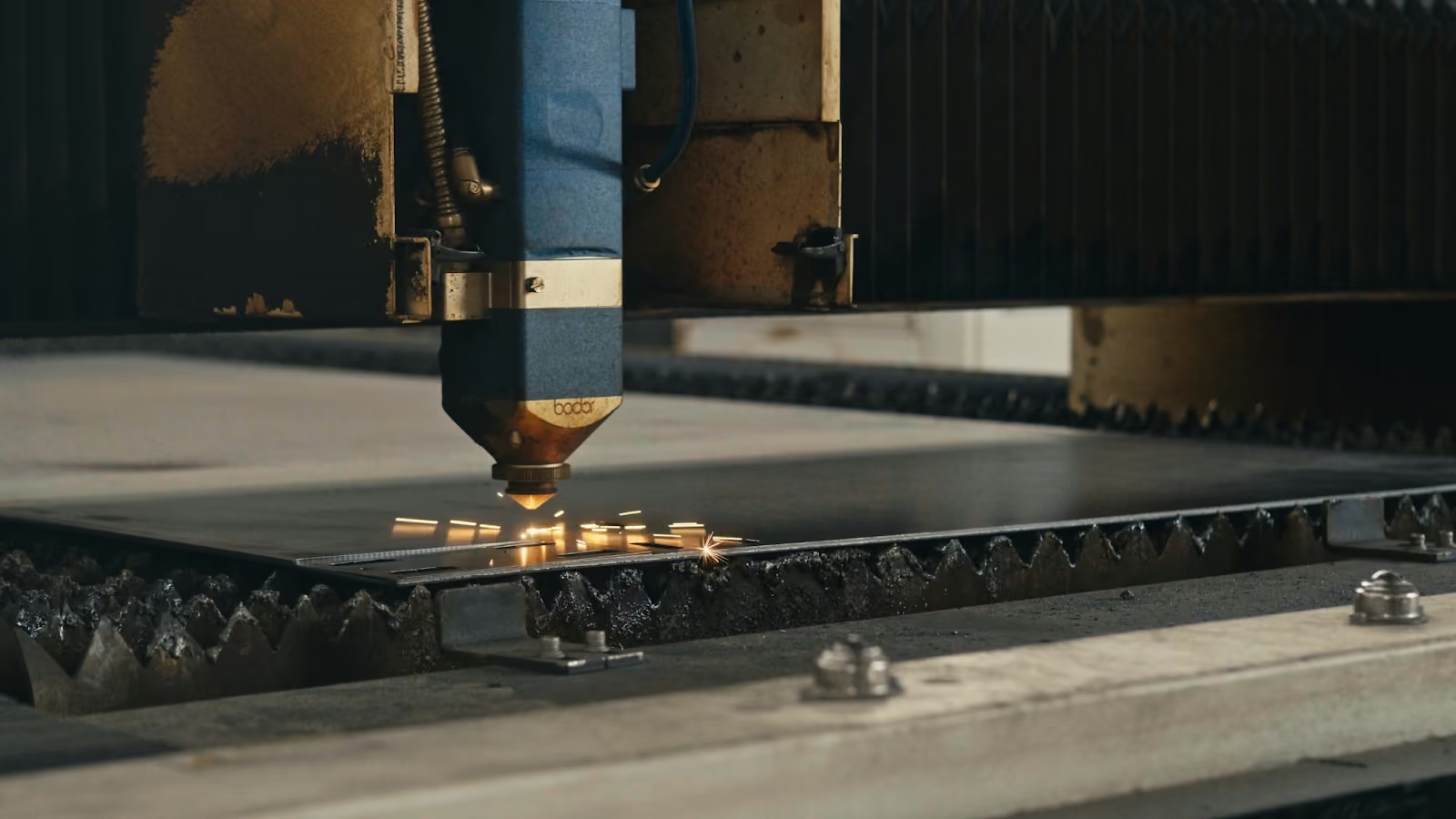
In laser cutting, a focused laser beam is used to cut steel, stainless steel, and aluminium with exceptional edge quality and tight tolerances. It is ideal for precision brackets, intricate profiles, enclosures, and components that require very little post-processing. Because the heat-affected zone is small, laser-cut parts hold their geometry well during forming.
Plasma cutting
Plasma cutting is usually preferred for thicker materials or industrial structural work. It's not as precise as a laser, but it delivers fast cutting speeds at a lower cost. Plasma is common in sheet metal manufacturing processes that deal with heavy frames, ducting, or components where short tolerance is acceptable.
Waterjet cutting
Waterjet cutting uses a high-pressure stream of water mixed with abrasive particles to slice through any material without heat. It’s used to manufacture aerospace alloys, hardened steels, or laminated structures that cannot tolerate thermal distortion.
Shearing
Shearing is the simplest cutting method. It’s mechanical and used for straight-line cuts in thin-gauge steel and aluminium. It’s fast, inexpensive, and ideal for batch production of simple geometries. The downside is that it is limited to straight cuts and requires post-processing if a burr-free edge is needed.
2. Forming
Forming is the stage where a flat sheet begins to take on its functional three-dimensional shape. This is where geometry and material behavior meet. The forming process relies on the sheet’s ductility and its ability to stretch, compress, and flow without cracking or thinning excessively.
What happens during sheet metal forming?
Forming reshapes metal without removing material. Instead, it relies on the material’s ductility and the accuracy of the tooling. After the metal has been cut to the specific dimensions, force is applied to flow along the predictable deformation paths. This precise forming process helps to create repeatable geometries, which will then be joined together in the next process.
The quality of forming directly affects:
- Dimensional accuracy
- Part strength and rigidity
- Fatigue resistance
- Assembly fit
What are the different types of forming in sheet metal manufacturing?
There are several forming methods, but the most widely used are bending, stamping, deep drawing, press forming, roll forming, and specialized operations like 3-roll and 4-roll bending.
Bending
Bending is the most common sheet metal forming method, used for panels, brackets, enclosures, channels, and structural components.
What are the different types of bending?
- V-bending: This standard method uses a punch and a V-shaped die and is extremely versatile
- Air bending: The sheet does not contact the full die surface, allowing for multiple angles with a single tool
- Bottoming: The sheet is pressed fully into the die for higher accuracy and reduced springback
- Coining: A very high force compresses the metal into the die profile, delivering extremely tight angles, but at a higher cost
- Hemming: Folding edges over for safety, stiffness, or surface preparation
- Wipe bending: Used for flanges where the material is swept around a form
Stamping
Stamping uses a die and a punch to press the sheet into a defined shape at high speed. It’s ideal for high-volume parts, such as automotive brackets, housings, appliance components, and electronic enclosures. Once the tooling is perfected, stamping delivers repeatability at the lowest cost per part.
They are different variations of stamping, like:
- Blanking
- Piercing
- Flanging
- Embossing
- Shallow forming
These provide uniform accuracy and are often paired with progressive dies for continuous production.
Deep drawing
Deep drawing forms cups, shells, and hollow cylindrical components by pulling the sheet into a die cavity. This process is common in cookware, fuel tanks, casings for motors, and many pressure-containing components. The key challenge here is controlling thinning and avoiding wrinkles.
Press forming
Press forming is a more general method that includes bending, flanging, embossing, and coining. It essentially creates any shape through a controlled press stroke. It is used across every industry, from food processing equipment to HVAC ducting.
Roll forming
Roll forming is different from press forming. Instead of a single hit, the sheet passes through a series of rollers that gradually form the profile. This is the process used for long, continuous sections like rails, channels, and structural profiles used in solar mounting, construction, and warehouse racking systems.
3-roll and 4-roll bending machines
Such bending machines handle cylindrical forms, like tanks, tubes, shells, and cones, by rolling the sheet into curved surfaces. This is essential in chemical processing, food equipment, and pressure vessels.
Each forming method uses precise control over tooling design, lubrication, sheet thickness variation, and material grain direction.
3. Joining
Joining is where individual sheet metal parts become functional assemblies. The choice of joining method influences structural strength, aesthetics, sealing quality, hygiene, conductivity, and long-term durability.
In joining, two sheet metal parts are joined together through heat and/or pressure.
What are the common types of joining used in sheet metal fabrication?
Here are some of the most common methods for permanent structural joints:
Brazing
Brazing is a process of joining two sheet metal parts using a filler metal that melts below the base metal’s temperature. It creates clean joints with minimal distortion. And it’s useful for dissimilar metals, thin-walled components, and leak-proof joints, like in HVAC and heat exchangers.
Welding
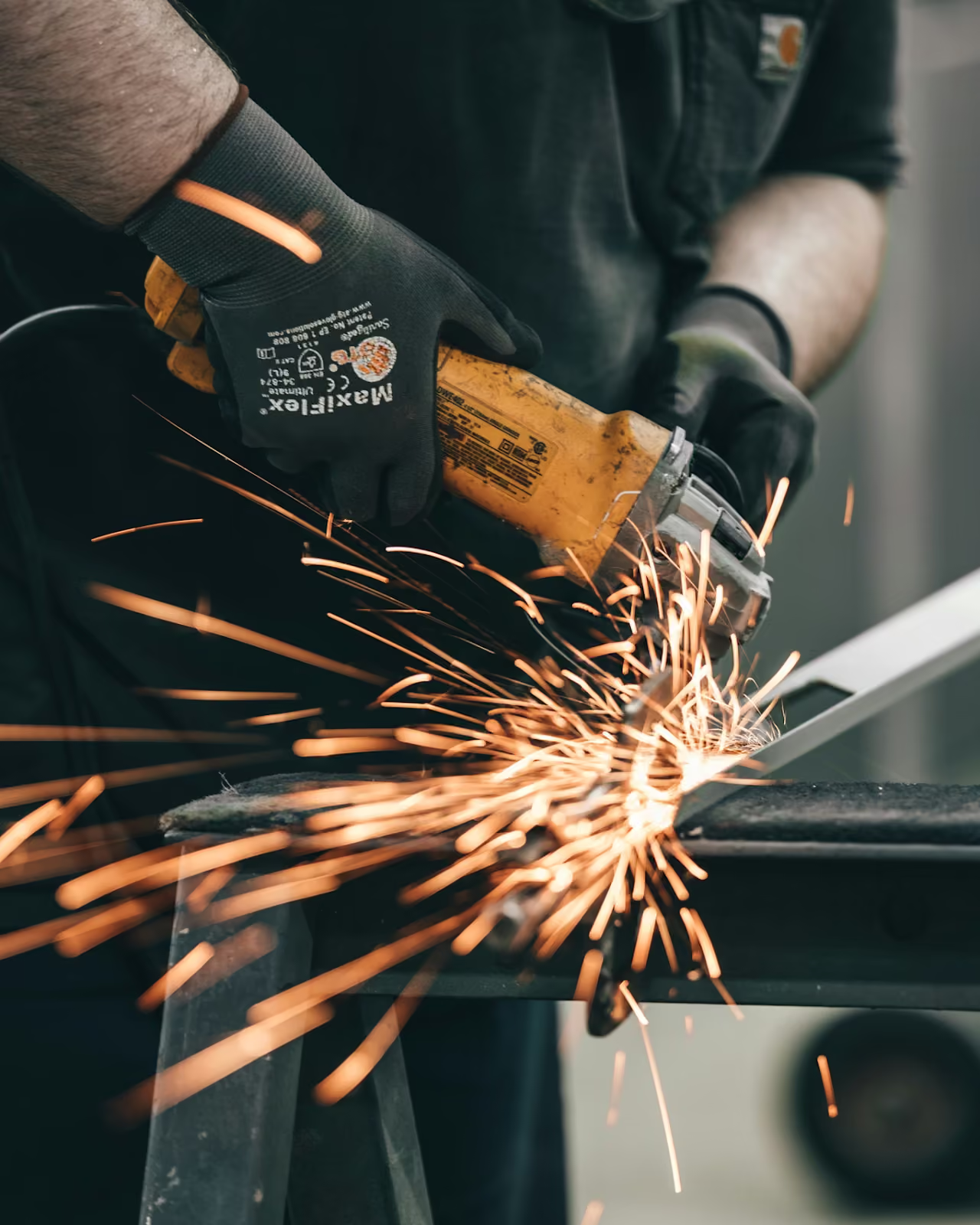
Welding is the most robust joining method for sheet metal. It fuses materials permanently through heat, pressure, or both.
Here are the major welding processes:
- MIG welding is a fast process, ideal for carbon steel frames, ducts, brackets, and other fabrication work.
- TIG welding is slower but extremely clean, making it the preferred method for stainless steel, aerospace alloys, and food-grade equipment.
- Spot welding uses resistance heat to join overlapping sheets and is indispensable in automotive manufacturing.
- Robotic welding adds speed and consistency, especially for large runs where every bead must look identical.
Soldering
Soldering is a low-temperature process used mostly for electrical and light mechanical assemblies. It’s less common in heavy sheet metal but essential for electronics-integrated components.
Mechanical Fastening
Not all joints should be welded. Mechanical fastening is essential when components require disassembly or when heat could damage the function or coating. This includes bolts, screws, rivets, clinching, and other fastening methods. Mechanical fastening avoids heat distortion and supports modular designs.
Adhesive Bonding
This is used for mixed-material assemblies, vibration damping, or applications requiring uniform stress distribution.
4. Surface Finishing
Surface finishing is not just about the appearance of the final product. It directly affects corrosion resistance, hygiene, wear protection, conductivity, and compliance with industry standards. Most sheet metal components undergo finishing because bare metal oxidizes, scratches easily, or cannot meet food-grade or electrical requirements.
Finishing choices depend on the environment the part will operate in: chemical exposure, temperature, abrasion, hygiene standards, and regulatory requirements. In many industries, finishing is as critical as the forming or welding that precedes it.
What are the common finishing methods in sheet metal fabrication?
The most common finishing methods are powder coating, anodizing, passivation, electro-polishing, plating, and specialty finishes.
Powder coating
Powder coating creates a durable, abrasion-resistant finish ideal for industrial machinery, electrical enclosures, and consumer products. It resists chipping and chemical exposure better than liquid paint, making it popular across all manufacturing sectors.
Anodizing
Anodizing is specific to aluminium and creates a controlled oxide layer that increases corrosion resistance and provides a clean, architectural appearance. It is widely used in aerospace, electronics, and high-end consumer hardware.
Passivation
Passivation is used for stainless steel. It removes free iron and restores the chromium-rich oxide layer that keeps stainless steel corrosion-resistant, which is essential for pharmaceutical, medical, and food contact equipment.
Electro-polishing
Electro-polishing smooths the surface at the microscopic level. It is the finishing method of choice for components that require ultra-hygienic or low-friction surfaces, such as pharmaceutical tanks, food mixers, and semiconductor process equipment.
Other finishes like zinc plating, nickel plating, e-coat, and hot-dip galvanizing are used when the part requires conductivity, sacrificial rust protection, or enhanced outdoor performance.
Which Materials Are Most Commonly Used in Sheet Metal Fabrication?
Sheet metal performance depends heavily on the material you choose. Each metal behaves differently when cut, bent, welded, formed, or finished, and understanding these differences determines durability, weight, corrosion resistance, and long-term cost.
Below is a breakdown of the most widely used materials and why they matter.
Steel
Steel remains the backbone of sheet metal manufacturing because it balances strength, cost, and ease of fabrication.
- Mild steel (CRCA, HR sheets) offers excellent weldability and is used for structural frames, machinery guards, enclosures, furniture, and automotive parts.
- High-strength low-alloy steel is preferred when you need more rigidity without adding thickness, commonly used in transportation and heavy machinery.
- Galvanized steel adds a protective zinc layer that resists corrosion, making it suitable for HVAC ducts, outdoor cabinets, electrical enclosures, and construction components.
Steel generally tolerates bending, rolling, and welding very well, which is why it’s a go-to for both prototypes and mass production.
Stainless Steel
Stainless steel is chosen when hygienic, corrosion-resistant, or heat-resistant properties are mandatory.
- 304 and 304L: Widely used in food-grade processing, commercial kitchens, consumer appliances, and general enclosures.
- 316 and 316L: Stronger resistance to chlorides and chemicals; used in pharma, marine, and chemical processing.
- Ferritic steel (430): Cost-effective for decorative trim, panels, and appliance housings.
Stainless steel behaves differently during forming: it work-hardens quickly and may require more force, controlled bending radii, and careful heat management during welding.
Aluminium
Aluminium offers low weight, good corrosion resistance, and excellent conductivity, making it ideal for:
- Electrical housings and busbar covers
- Heat exchangers and HVAC components
- Automotive panels and lightweight frames
- Aerospace brackets and enclosures
Aluminium bends easily but is prone to cracking if the alloy is too hard or if the bending radii are too tight. Its melting temperature is also lower, which directly affects welding technique selection (often TIG welding with precise heat control).
Copper, Brass, and Bronze
These alloys are used when conductivity, aesthetics, or specific corrosion-resistant properties are required.
- Copper: electrical components, roofing, EM shielding.
- Brass: decorative hardware, plumbing systems, low-friction components.
- Bronze: marine fittings, industrial bushings, chemical-resistant applications.
These metals tend to be softer, making them suitable for deep drawing, forming, and intricate laser-cut patterns.
Titanium and High-Performance Alloys
Titanium and other alloys, such as Inconel, Hastelloy, Monel, and Nimonic, are used in demanding environments where extreme heat, corrosion, or load cycles are present. Industries that rely on them include aerospace, marine, chemical processing, and high-temperature systems.
Their fabrication requires expertise, as titanium reacts with oxygen when overheated, and alloys like Inconel resist forming due to their high strength at elevated temperatures.
How Does Material Selection Affect Performance?
Material selection impacts nearly every downstream factor:
- How tightly you can bend without cracking
- How easily can joints be welded
- Whether corrosion will shorten the component life
- Expected weight of the final assembly
- Cost of raw material and fabrication time
- Surface finishing requirements
- Compliance for food-grade, pharma, or marine applications
For example, aluminium may reduce weight compared to steel but may not offer the same stiffness. Stainless steel ensures hygienic surfaces but costs more and may distort under welding if not controlled. Choosing the correct material ensures that the part performs exactly the way the application demands.
What Certifications or Standards Ensure Material Reliability?
Sheet metal materials are certified through various standards, such as:
- ASTM International: For mechanical properties, chemical composition, and sheet quality
- ISO standards: For alloy grades, corrosion resistance, tensile specs
- EN standards (Europe): For dimensional accuracy and surface finish
- RoHS/REACH: Compliance for electronics and export
- NACE: Corrosion resistance for oil and gas
- FDA/3-A: Hygienic material requirements for food and pharma equipment
A reliable sheet metal fabrication supplier always provides Material Test Certificates (MTCs) verifying chemical composition, mechanical properties, and heat traceability.
Design and Workflow in Modern Fabrication
Modern sheet metal fabrication isn’t a linear draw → cut → bend sequence anymore. It runs on a digital workflow where design intent, material behaviour, machine capability, and quality control are tied together before the first sheet is even cut. This reduces uncertainty, lowers scrap, and ensures that the part you model is the part that arrives at the assembly line.
How Does CAD/CAM Improve Accuracy and Efficiency in Fabrication?

Computer-Aided Design/Computer-Aided Manufacturing (CAD/CAM) systems create a continuous path from design to production. At its core, CAD defines what needs to be made, and CAM determines how the machines will make it. When the two work together, fabrication becomes predictable because every dimension, bend angle, relief cut, and tolerance is validated digitally before the metal touches the machine.
A modern CAD model captures bend allowances, K-factors, corner reliefs, material thickness, and fastener details. When this is exported to CAM software, the information gets converted to machine-ready instructions. The software then generates toolpaths for laser cutting, creates brake bending sequences, and assigns weld locations for robotic cells.
By the time a job reaches the floor, the machine already knows the sequence, the clearances, the tolerances, and the tool sets required. This leads to:
- More accurate first-article parts
- Lower rework and scrap
- Predictable cycle times
- Consistent tolerances across batches
In short, CAD/CAM turns sheet metal manufacturing into a controlled, repeatable engineering process rather than a trial-and-error operation.
Why Is Prototyping a Critical Part of the Fabrication Process?
Even with advanced CAD/CAM, real-world behavior often reveals what software cannot fully predict. That’s why prototyping is a defining step in modern sheet metal manufacturing, especially for assemblies that must snap-fit, align, withstand load, or integrate with electronics and fasteners. Prototyping helps every iteration reduce the risk of expensive redesigns or assembly-line failures later.
A prototype is built to validate three things:
- Geometry: Are the bends landing at the correct angles? Do tabs, slots, hinges, and mounting brackets line up on the assembly?
- Manufacturability: Are the bend radii practical? Is the part over-designed with too many operations or specialty tooling requirements?
- Performance: Does the material hold up under load, vibration, or thermal cycling? Are the welded areas distorting more than expected?
A prototype also reveals interactions that only appear when multiple processes stack up. For example, a laser-cut edge may be dimensionally perfect, but after bending, powder coating, and fastening, tolerances may shift. Prototyping captures these shifts before they propagate into full production.
Manufacturers often prototype in a lower-cost material, such as mild steel or aluminum, to refine:
- Fit and enclosure tolerances
- Flat pattern accuracy
- Weld distortion
- Mounting hole locations
- Fastening behavior (thread pull-out, torque fit, etc.)
- Surface finish appearance
Once validated, the design is locked, and production-grade materials like stainless steel, galvanized steel, aluminium alloys, or specialty metals are used to produce the final run.
Industry Use Cases of Sheet Metal Fabrication
Sheet metal parts are used across almost every sector because they offer the flexibility to be cut, bent, rolled, welded, or finished into nearly any geometry. Below are some of the most common industries and where sheet metal fits into their core systems.
Automotive and Transportation
Body panels, battery housings, busbars, brackets, exhaust components, seat structures, interior trim, road infrastructure components, and EV enclosures all rely on sheet metal for lightness and strength.
Food & Beverage Processing
Hygienic stainless-steel tanks, chutes, CIP lines, machine guards, filler components, conveyor housings, and cleanable enclosures are all manufactured using precision sheet metal.
Pharmaceutical Equipment
Stainless steel sheet metal is used for tablet processing equipment, packaging lines, biosafety enclosures, laminar flow systems, and sterile housings where joints must be smooth, welds polished, and surfaces compliant with sanitary standards.
Energy & Renewables
Solar frames, inverter enclosures, wind turbine housings, battery casings, structural supports, and thermal management systems depend on corrosion-resistant sheet metal parts.
HVAC and Data Centers
Ducting, air-handling unit panels, cold/hot aisle containment structures, server racks, and cooling-system enclosures are all fabricated using sheet metal due to its rigidity, precision, and modifiability.
Aerospace
Lightweight, high-strength aluminium and titanium parts such as avionics enclosures, seat frames, ducting, brackets, and structural reinforcements are common sheet metal applications.
Construction and Infrastructure
Architectural cladding, roofing panels, railings, electrical distribution boxes, access covers, framing components, and safety enclosures rely on both durability and design flexibility.
Achieve Predictable Quality with Fast Production Cycles
Sheet metal manufacturing brings together geometry, material behavior, and process control. Every stage, from how the sheet is cut to the final surface finish, affects durability, alignment, corrosion resistance, and long-term performance.
When these processes are properly engineered, manufacturers get components that assemble cleanly, hold their tolerances over time, and support repeatable production across thousands of units.
FAQ

.svg)