Custom CNC Milling Services

Precision-built. Foundational. Industry-wide.
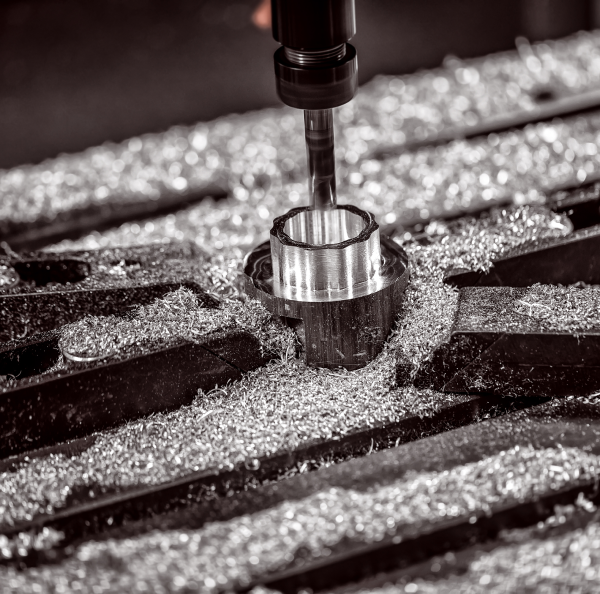
CNC milling and CNC milling machine capabilities are among the core processes in modern manufacturing, offering a precise, computer-controlled method that shapes raw materials into functional components through controlled material removal. It serves as a fundamental production technique integrated into countless industries that depend on accuracy and repeatability, including aerospace, automotive, medical devices, robotics, and energy systems.

By bridging the digital and physical worlds, CNC milling transforms a CAD model, whether used in traditional setups or via a CNC milling machine, into a tangible, high-performance component ready for real-world use.
ISO-Certified
±0.001" Tolerance
Global Network
Explore Our Manufacturing Capabilities

High-Quality, Rapid CNC Milling

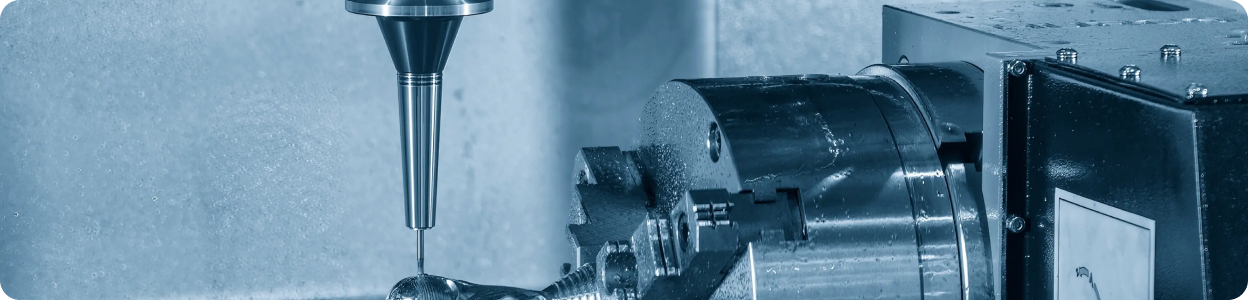
High-quality CNC machine milling combines automation, precision engineering, and rigorous process control to produce complex parts with tight tolerances and consistent repeatability. This process is typically performed using 3-, 4-, and 5-axis CNC milling machines, which enable the creation of intricate geometries, contoured surfaces, and multi-sided features from a wide range of machinable materials.

Within Wootz.work's manufacturing network, these capabilities form an integral part of the overall production workflow. Each manufacturing partner applies advanced CAD/CAM programming, real-time process monitoring, and inspection systems to maintain consistent accuracy from design validation through final production.
Key Capabilities:
01
3-, 4-, and 5-axis CNC milling centers
02
Machining tolerances as tight as ±0.001" (0.025 mm)
03
Component sizes up to 80" × 48" × 24" (2032 × 1219 × 610 mm)
04
Support for multi-material machining and mixed production batches
05
ISO-certified inspection and documentation
By integrating these precision milling capabilities within a global, ISO-certified network, modern manufacturers achieve consistent results across both prototype and large-scale production.
Book A Call

Custom CNC Milling Materials

Selecting the right material is one of the most important decisions in CNC milling, as it directly affects a part's performance, durability and cost efficiency. When combined with CNC milling machine services, this material selection plays a crucial role in achieving high-precision and industry-compliant results.

With Wootz.work's manufacturing partner, materials are sourced from verified suppliers and accompanied by material test certifications to ensure full traceability and compliance with quality standards.
Metals
Aluminum
6061-T6, 7075-T6, 2024-T3, MIC-6, 5052, 7050-T7451
Stainless Steel
303, 304, 316/316L, 17-4 PH, 420
Mild & Alloy Steel
1018, 4130, 4140, ASTM A36
Brass & Bronze
C360, C932, Bearing Bronze
Copper
C101, C110, ETP Copper
Titanium
Grade 2, 6Al-4V
Zinc Alloys
Sheet Alloy 500
Plastics
ABS
Acetal (Delin)
PTFE (Teflon)
ULTEM
Polycarbonate (PC)
HDPE
UHMW
Acrylic
Nylon 6/6
PEEK
Garolite (G-10)
Polypropylene (PP)
Material choice depends on the functional requirements of the part, including mechanical load, temperature range, environmental exposure, and surface finish needs.Manufacturers often review each design for machinability, strength, and cost optimization before production begins, ensuring the chosen material aligns with performance and production goals.
Custom Sourced Materials
Beyond our standard inventory, our partners support custom material sourcing for specialised engineering requirements. Our engineers will evaluate material machinability, tool compatibility, and thermal behaviour to recommend the most efficient production approach.

They will also accommodate customer-supplied materials for unique applications where exact composition and certification are critical, such as aerospace or medical-grade alloys.

Applications of
CNC Milling

CNC milling is one of the most versatile and widely used manufacturing processes, capable of working with nearly any machinable metal or plastic. Its precision, flexibility, and scalability make it essential across every stage of product development.
Rapid Tooling
We invest in the latest CNC-controlled laser, plasma, and waterjet equipment, optimised for low energy consumption without sacrificing performance.
Rapid Prototyping
Advanced nesting software ensures maximum material utilisation. We plan cuts strategically to reduce offcuts, scrap, and raw material waste.
End-Use Production
Where finishing is required, our powder coating uses zero-VOC technology, helping our customers meet air quality and environmental standards.
Custom Assemblies
We responsibly manage scrap material recycling, reducing landfill contribution and supporting a circular economy for industrial metals.

Advantages of CNC Milling

CNC milling provides several advantages over traditional machining, offering higher accuracy, repeatability and efficiency. Our partners enhance these advantages through advanced technology, process control and extensive industry experience, supporting some of the best CNC milling services available globally.
Book A Call
01
Get production-ready parts in as little as 3–5 business days.
Rapid Turnaround
02
Precision & Accuracy
Consistent tolerances of ±0.001" achievable across materials.
03
Complex Geometries
Multi-axis machining allows intricate shapes and tight features.
04
Material Flexibility
Compatible with over 40 metals and plastics.
05
Scalable Production
From one-off prototypes to 10,000+ units.
06
Excellent Surface Quality
Standard 125 Ra finish with optional polishing, anodising, or coating.
CNC milling provides several advantages over traditional machining, offering higher accuracy, repeatability and efficiency. Our partners enhance these advantages through advanced technology, process control and extensive industry experience, supporting some of the best CNC milling services available globally.

CNC Milling Tolerances & Standards

Our machining operations adhere to strict tolerance frameworks and international standards such as ISO 2768 and GD&T (Geometric Dimensioning and Tolerancing).
Book A Call
Feature
Maximum Part Size
Distance Tolerances
Precision Tolerances
Minimum Feature Size
Threads & Tapped Holes
Edge Condition
Surface Finish
Standard / Capability
80" × 48" × 24" (2032 × 1219 × 610 mm)
±0.005" for standard features
Down to ±0.001" upon request
0.020" (0.50 mm)
All standard threads; custom threads supported
Sharp edges deburred by default; specify if sharp edges are required
As-machined 125 Ra or better (custom finishes available)
Each part undergoes inspection using CMM, optical scanners, and surface profilometers to verify compliance before delivery.

What is CNC Milling?

CNC milling is a subtractive manufacturing process that uses computer-controlled rotating tools to remove material from a solid block, or workpiece, to form a final part. A CNC milling machine interprets digital G-code, which directs tool movements, spindle speeds and feed rates with high precision.Unlike other machining processes, CNC milling can move simultaneously across multiple axes, enabling the creation of complex geometries, angled features and curved surfaces. By using an advanced CNC milling machine, engineers can achieve greater design freedom and tighter tolerances.Our manufacturing partners' CNC milling combines advanced automation with operator expertise to deliver consistent, repeatable results—even for intricate 3D components used in high-performance systems.
Global OEM Fabrication

Types of CNC Mills

3-Axis Milling
4-Axis Milling
Sustainable packaging options on request

Other Benefits of CNC Mill Machining Processes

01
Rapid Turnaround
Get production-ready parts in as little as 3–5 business days.
02
Precision & Accuracy
Consistent tolerances of ±0.001" achievable across materials.
03
Complex Geometries
Multi-axis machining allows intricate shapes and tight features.
04
Material Flexibility
Compatible with over 40 metals and plastics.
05
Scalable Production
From one-off prototypes to 10,000+ units.
06
Excellent Surface Quality
Standard 125 Ra finish with optional polishing, anodising, or coating.

Frequently Asked Questions

What is CNC Machining and How Does It Work?

How Does CNC Machining Differ from Traditional Machining?

Which Industries Commonly Use CNC Machining?

What Factors Affect CNC Machining Accuracy and Quality?

What Materials Can Be Used in CNC Machining?

How Does CNC Machining Contribute to Modern Manufacturing?