

CNC milling is a subtractive manufacturing process that removes material from a solid workpiece using rotating cutting tools. A modern CNC milling machine is ideal for creating flat surfaces, pockets, slots, holes, and contoured shapes with exceptional precision.
Modern CNC milling machines often operate on 3-, 4-, or 5-axis systems, which allow the tool to move in multiple directions and machine complex geometries with high precision.
Milling is widely used for producing components such as housings, brackets, molds, and mechanical assemblies that require both structural integrity and aesthetic surface quality. It supports a wide range of materials, including aluminium, stainless steel, titanium, and engineering plastics.
CNC milling is a subtractive manufacturing process that removes material from a solid workpiece using rotating cutting tools. A modern CNC milling machine is ideal for creating flat surfaces, pockets, slots, holes, and contoured shapes with exceptional precision.
Modern CNC milling machines often operate on 3-, 4-, or 5-axis systems, which allow the tool to move in multiple directions and machine complex geometries with high precision.
Milling is widely used for producing components such as housings, brackets, molds, and mechanical assemblies that require both structural integrity and aesthetic surface quality. It supports a wide range of materials, including aluminium, stainless steel, titanium, and engineering plastics.
CNC turning is used to produce cylindrical or rotationally symmetric parts by rotating the material against a cutting tool. It’s particularly effective for manufacturing shafts, pins, bushings, spacers, and threaded fittings.
During the turning process, the machine precisely controls the rotational speed and cutting depth to achieve consistent diameters, smooth finishes, and concentric accuracy.
CNC turning is essential for parts that demand tight tolerances, roundness, and axial alignment, and is commonly used in applications such as machinery components, fasteners, and precision instruments.
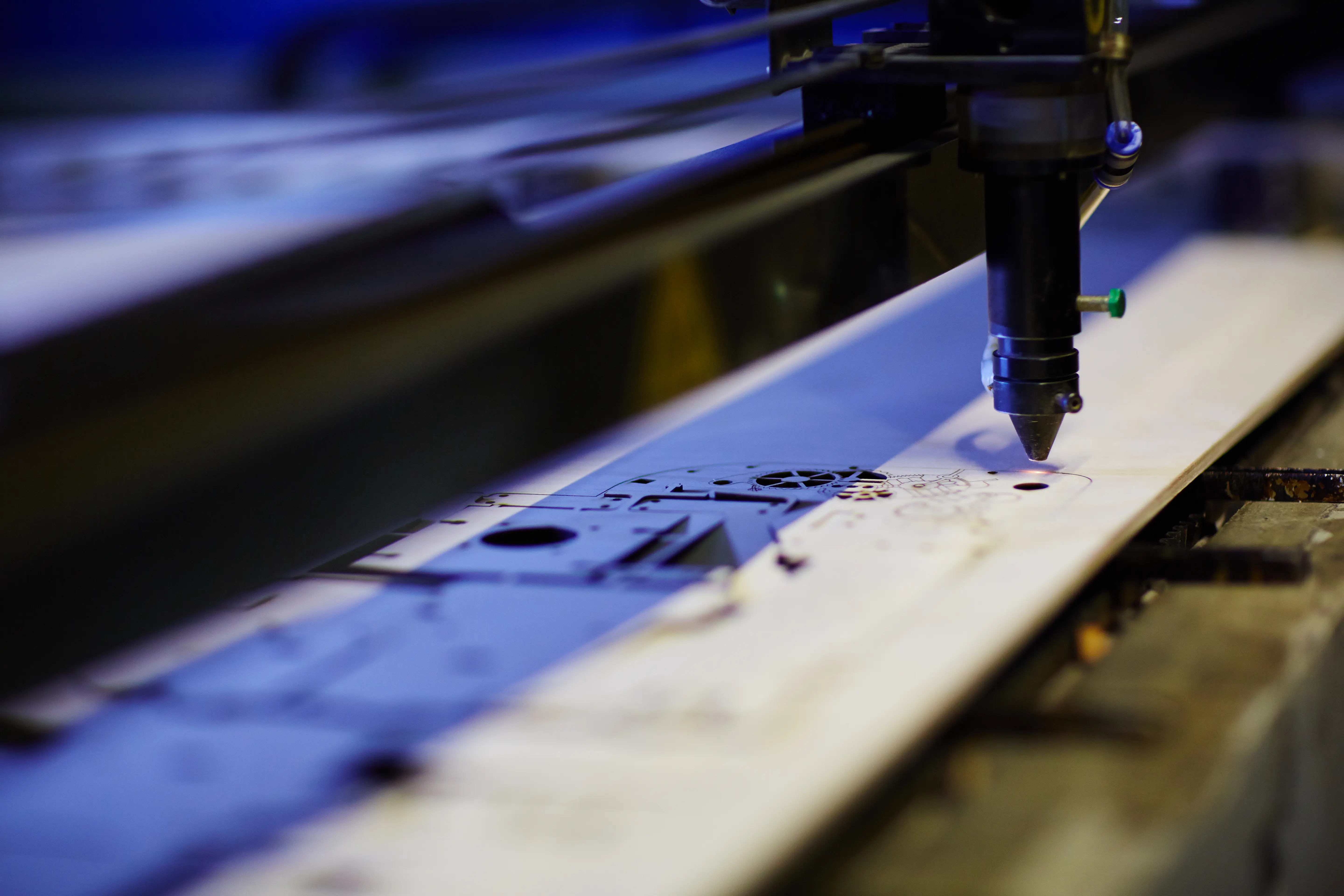
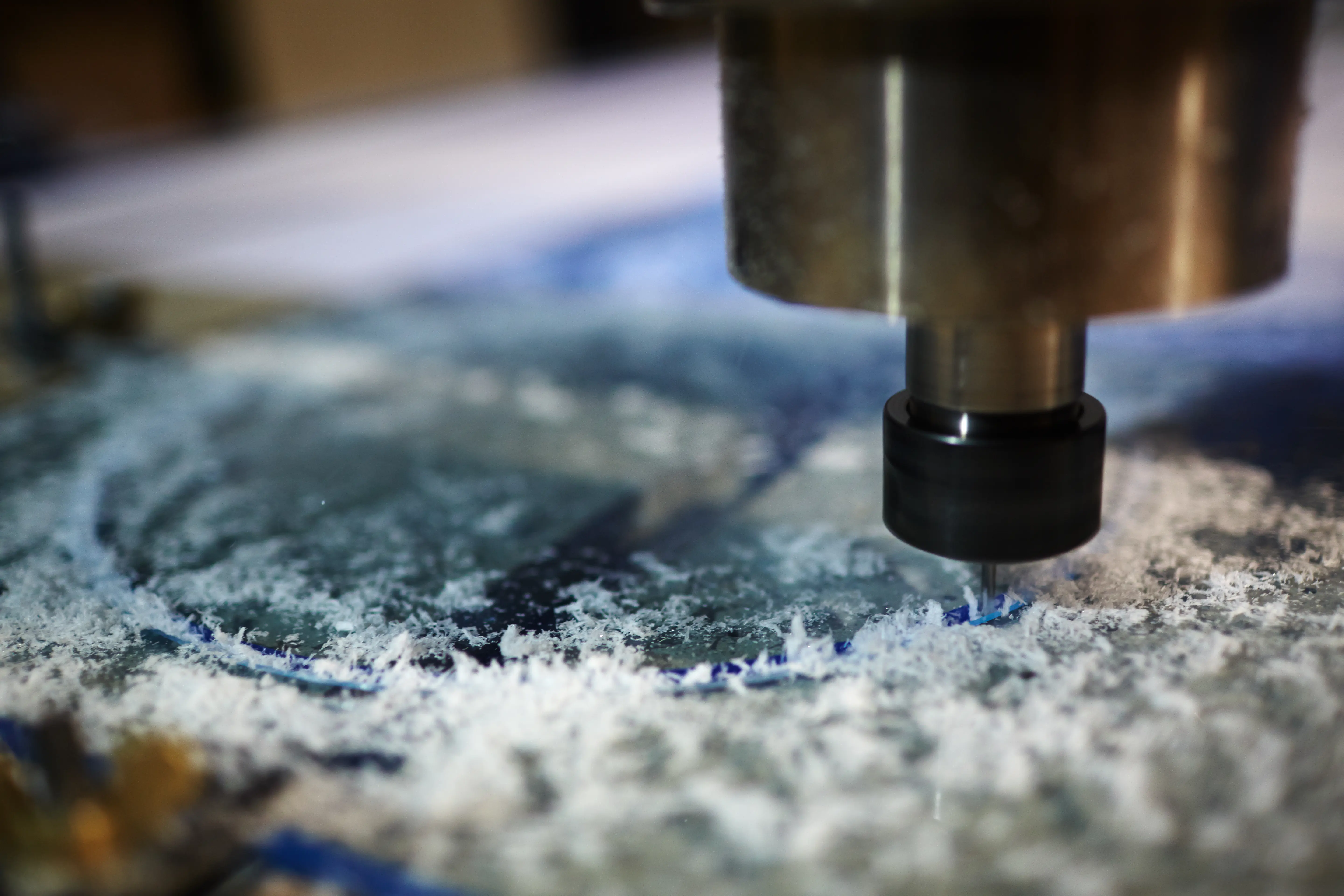
CNC routing is similar to milling but is typically used for flat or sheet materials, including plastics, composites, and soft metals. Advanced CNC machine routers use high-speed rotating bits to cut and shape large panels into specific forms, contours, or openings.
This process is well-suited for producing enclosures, display panels, fixtures, and prototypes, where dimensional stability, smooth edges, and clean finishes are important.
CNC routing offers a cost-effective method for shaping lightweight materials while maintaining high accuracy and repeatability, making it a key process in industries such as electronics, signage, and product design.
High-volume CNC machining refers to the use of automated, computer-controlled production systems to manufacture large quantities of precision parts with consistent quality and dimensional accuracy. In these setups, each CNC machine is optimized for repeatable output, allowing OEMs (Original Equipment Manufacturers) and large-scale producers to achieve uniform performance across thousands of identical components.
By integrating automated workflows, dedicated production lines, and process monitoring systems, high-volume CNC machining ensures that each batch maintains the same precision and traceability as the first.
Perfect for creating moulds, dies, and jigs that ensure precision in mass production.
Quickly transform CAD models into functional prototypes to validate form, fit, and performance.
Perfect for creating moulds, dies, and jigs that ensure precision in mass production.
Integration-ready components for complex systems across automotive, robotics, and aerospace.